
Site Security Audits & Physical Security Assessments
Evidence-led, operationally informed reviews of physical security, access, procedures, technology and response.
On-site assessment | Photographic findings where permitted | Prioritised recommendations | Clear written report
20+ Years’ Security Experience
Audits are informed by front-line, management, electronic-security and response experience.
Operationally Led
We consider how controls are likely to perform during normal operations and a foreseeable incident.
Clear Evidence
Findings can be supported by photographs, site observations and a documented rationale.
Practical Priorities
Recommendations are ranked so urgent weaknesses are separated from longer-term improvements.
A Serious Review of How the Site Is Actually Protected
A site security audit should not be a checklist completed from a desk. It should examine how the boundary, access arrangements, people, procedures, alarms, CCTV and response plans work together.
MW Global Security Services carries out physical security audits for commercial premises, construction projects, energy and industrial locations, warehouses, schools, vacant property and other operational sites.
Our experience matters because many weaknesses only become obvious when they are viewed through an operational lens. A secure gate can still fail if deliveries are waved through. A camera can be high quality but record the wrong area. An alarm can activate correctly but still produce a poor outcome if no one knows what happens next.
The audit concentrates on vulnerabilities, consequences and realistic corrective action—not on making the report look impressive.

What Is a Site Security Audit?
It is a structured review of physical protection and operational security, based on the site, its use and the risks that matter.
Threats
Physical and operational security threats that could reasonably affect the site, including theft, trespass, vandalism, violence, protest, insider activity, deliberate fire-setting or disruption. This does not constitute a statutory fire risk assessment.
Vulnerabilities
Where current controls can be bypassed, misunderstood, ignored, poorly maintained or defeated.
Consequences
What an incident could mean for people, operations, assets, evidence, reputation and recovery.
Existing Controls
What is already in place, whether it works and where separate controls depend on one another.
Response
Who receives an alert, who makes decisions, who attends and what can safely be done.
Priorities
Which findings need immediate action, which need planned improvement and which can be monitored.
Why Operational Experience Matters
The value of an audit depends on the quality of the judgement behind it. Security knowledge must extend beyond products, standards and theory.
MW Global’s audit work draws on experience across guarding, gatehouse operations, patrols, alarm response, CCTV, Ajax alarm systems, temporary security, incident management and security consultancy.
Relevant operational experience includes work connected with construction, logistics, industrial, energy, education, aviation-related, retail and vacant-property environments. The depth and relevance of that experience varies by assignment, and the audit remains limited to the agreed physical and operational security scope.
- Guarding experience helps us assess whether instructions, staffing and escalation are workable.
- Alarm and CCTV experience helps us identify poor detection, blind spots, weak communications and unrealistic response assumptions.
- Operational management experience helps us understand deliveries, contractors, shift changes, lone working and out-of-hours activity.
- Incident experience helps us distinguish a theoretical weakness from one likely to create a real operational failure.
“Experience should not dominate the report. It should improve every observation, question and recommendation.”
MW Global Security Services
What We Assess During a Site Security Audit
The final scope is agreed before the visit. Not every site needs every category reviewed to the same depth.
Perimeter and Boundaries
Fencing, walls, gates, interfaces, vegetation, climb aids, gaps, condition and lines of sight.
Vehicle and Pedestrian Access
Entrances, barriers, gatehouses, delivery routes, tailgating, visitor control and challenge procedures.
Buildings and Restricted Areas
Doors, windows, roof access, plant rooms, server rooms, stores and other sensitive areas.
CCTV and Surveillance
Coverage, blind spots, image purpose, lighting, recording, retention, user access and incident retrieval.
Intruder Alarms and Detection
Detection points, communications, warning devices, tamper risks, monitoring and response.
Lighting and Visibility
Dark approaches, glare, shadow, maintenance, external routes and areas hidden from staff or cameras.
Keys and Access Credentials
Key control, fobs, codes, leavers, contractors, master keys and emergency access.
People and Procedures
Staff practice, visitors, contractors, deliveries, lone working, patrols and reporting.
Security Incident Readiness
Security escalation, communications, safe actions within the agreed role, evidence preservation, responder access and handover. Wider emergency planning and business-continuity assessment are outside the standard audit.
How Our Audit Process Works
The process is structured, but it remains flexible enough to reflect the operation and the reason for the audit.
1. Scope and Brief
We establish the site, concerns, operating hours, recent incidents, key assets and required output.
2. Document Review
Available plans, procedures, incident information and existing assessments are reviewed where relevant.
3. On-Site Inspection
The site is walked in person, including boundaries, approaches, access points, buildings and selected internal areas.
4. Staff and Process Discussion
Relevant personnel may be asked how access, alarms, visitors, deliveries and incidents are handled in practice.
5. Risk Evaluation
Findings are considered against likelihood, consequence, current controls and ease of exploitation.
6. Report and Priorities
The client receives clear findings, evidence and proportionate recommendations ranked by urgency.
Examples of Physical Weaknesses an Audit Can Identify
These are simple examples from real-world physical security work. Serious losses often begin with an ordinary weakness that has been accepted for too long.
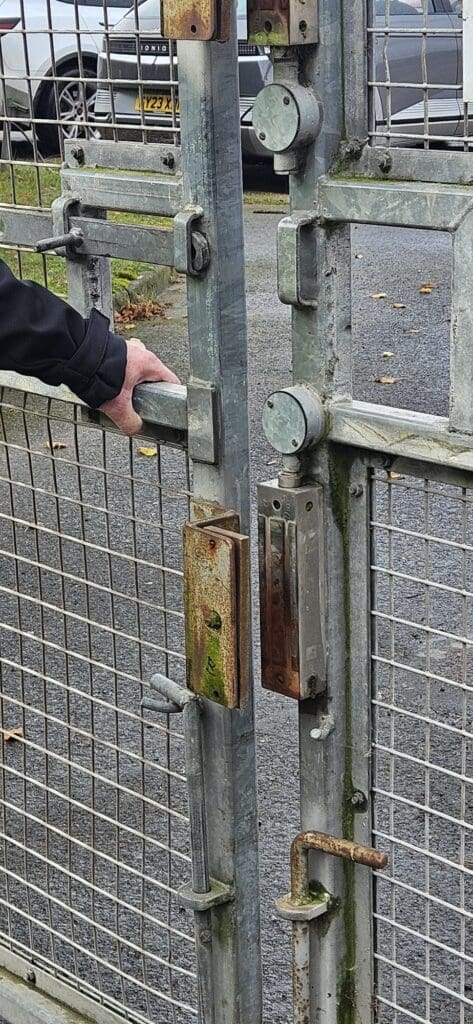
Compromised Gate or Lock
A gate may appear secure but still open through failed hardware, poor adjustment or weak maintenance.
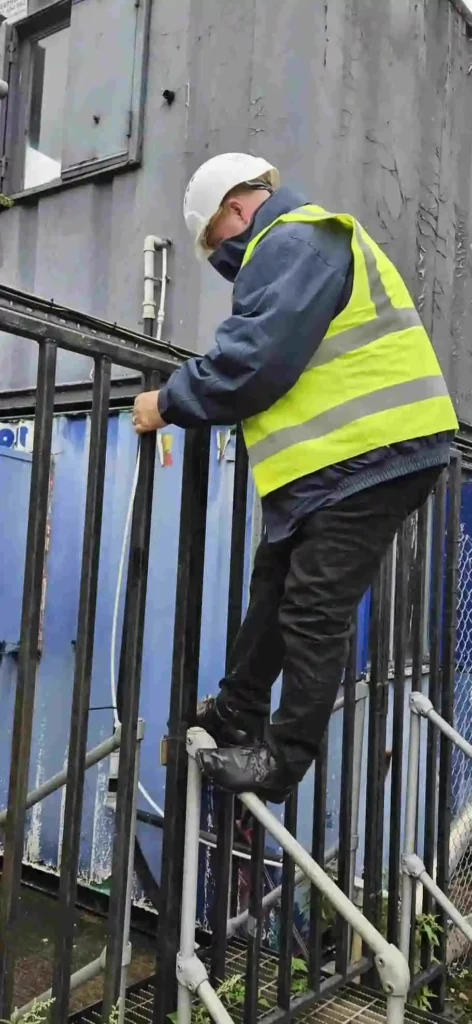
Climbing Aid Near the Boundary
Bins, containers, rails and loose materials can reduce the effective height of a perimeter.
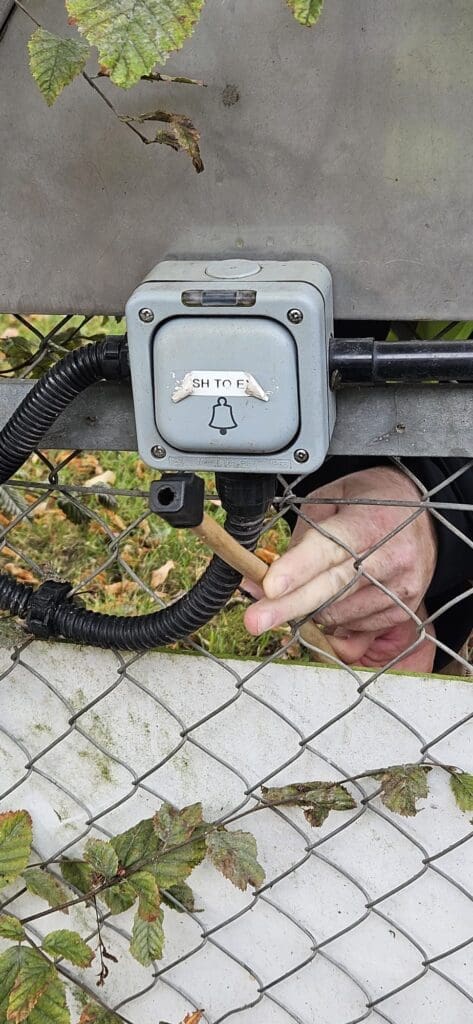
Access-Control Bypass
A release button, reader or latch can sometimes be reached through gaps or from an unsecured side.
Fence and Interface Weakness
Flexible mesh, damaged panels, vegetation and poor joins can create a practical route through.
What You Receive
The report is written for decision-makers, facilities teams, site managers and other relevant stakeholders—not only security specialists.
Executive Summary
A concise overview of the most important findings and the overall security position.
Scope and Limitations
What was inspected, what was excluded and any restrictions affecting the assessment.
Photographic Findings
Images and captions showing relevant weaknesses where photography is permitted.
Risk Priorities
Findings separated into urgent, high, medium and lower-priority actions as appropriate.
Recommendations
Clear actions linked to each finding, including procedural, physical, technical or staffing measures.
Implementation Notes
Practical sequencing, dependencies and issues that may affect cost or delivery.
Important: This service is limited to the physical and operational security scope agreed in writing. It does not replace a statutory fire risk assessment, health and safety assessment, cybersecurity assessment, structural or electrical survey, safeguarding audit, formal penetration test, legal advice, insurance approval or standards certification. No claim of compliance with a named law, standard, guidance document or insurer requirement is made unless that exact assessment is separately agreed and completed by a suitably competent person.
Relevant Experience Across Different Site Types
Experience across several site types can help identify recurring physical and operational weaknesses. It does not make the audit a substitute for sector-specific legal, safety, engineering, safeguarding or regulatory advice.
Construction and Development
Temporary fencing, plant, materials, changing access, contractor movement and out-of-hours exposure.
Energy and Utilities
Perimeter protection, protest exposure, remote locations, critical equipment and contractor control.
Warehousing and Logistics
Vehicle flow, goods movement, loading areas, staff access, theft and internal process weaknesses.
Industrial and Manufacturing
Plant rooms, restricted operational areas, maintenance access, shift patterns and security arrangements around continued operations. Health and safety assessment remains outside the audit scope.
Schools and Education
Boundaries, visitor access, public entry points and out-of-hours use. The audit does not replace a safeguarding assessment or the organisation’s safeguarding responsibilities.
Aviation-Related Sites
Hangars, vehicle routes, controlled areas, high-value assets and client-defined operating rules. Aviation regulation, screening and compliance are outside the standard audit unless specialist support is separately agreed.
Retail and Commercial Property
Public access, staff areas, cash or stock risk, lone working, CCTV and keyholding.
Vacant and Unoccupied Property
Trespass, arson, water damage, squatting, inspection routines, alarms and response.
When Should a Site Security Audit Be Considered?
After an Incident
The audit may help identify likely access routes, control failures and practical improvements, subject to the evidence available.
Before a New Contract or Project
A baseline assessment helps define security requirements before services or equipment are purchased.
After Site Changes
New buildings, gates, tenants, machinery, storage or working practices can invalidate old assumptions.
When Costs Are Increasing
An audit can assess whether existing guarding, patrols or technology are being used effectively.
Before Major Investment
A standalone review can reduce the risk of buying equipment that does not solve the real problem.
As Part of Routine Governance
Periodic review helps confirm that controls, contact details and response arrangements remain current.
Why Choose MW Global Security Services?
- Founder-led and operationally informed rather than a template-only consultancy approach.
- More than 20 years of security experience across front-line, management and technical work.
- Knowledge of guarding, alarms, CCTV, patrols and response so controls are reviewed as one system.
- Practical experience relevant to varied sites including construction, energy, logistics, industrial, education and aviation-related environments, where that experience applies to the agreed scope.
- Clear limitations and honest advice where a specialist survey, engineer or regulated assessor is needed.
- Proportionate recommendations that consider risk, operation, implementation and budget.
- Standalone audit option without requiring the client to purchase guarding or equipment from MW Global.
What Affects the Cost of a Site Security Audit?
A quotation is based on the agreed scope and output. We do not use one fixed price for every site because the work required can vary significantly.
Site Size and Complexity
Large sites, multiple buildings, remote areas and many access points require more inspection time.
Audit Scope
A focused perimeter review differs from a full audit covering procedures, technology, interviews and response.
Operating Hours
Day and night conditions, shift changes or live operations may require more than one visit period.
Documents and Interviews
Reviewing procedures, incidents, plans and staff practice can add depth and time.
Travel and Access
Distance, escorts, inductions, permits, PPE and restricted areas can affect the quotation.
Report Detail
The number of findings, images, drawings, implementation notes and presentation requirements affect reporting time.
From Audit to Improvement
The audit can be commissioned as a standalone service. Where requested, MW Global can also quote separately for selected guarding, patrol, alarm, CCTV or temporary-security improvements.
Security Guarding
Use audit findings to define officer duties, posts, patrols and escalation arrangements.
Commercial CCTV
Improve camera purpose, position, recording and incident retrieval.
Temporary Security
Apply proportionate detection, monitoring and response to changing sites.
Site Security Audit Coverage
Travel, site access and the required level of on-site time are included in the quotation.
East Anglia
Audits are available across Suffolk, Norfolk, Cambridgeshire and Peterborough.
Wider Regional Coverage
Selected work is available across parts of Essex, Bedfordshire, Lincolnshire, Leicestershire, Northamptonshire and Rutland.
UK Projects by Arrangement
Larger, specialist or multi-site audit work may be considered outside the normal service area after scope review.
Single-Site and Multi-Site Security Audit Programmes
An audit may cover one operational site, several similar premises or a mixed portfolio across different regions. The initial scope should reflect the number of locations, their similarities, priority risks and the reporting structure the client needs.
Portfolio Scoping
We establish the number of sites, operating types, regions, common controls and important differences before proposing the programme.
Priority or Sample Sites
A programme may begin with the highest-risk locations or a representative sample before the remaining sites are scheduled.
Individual or Consolidated Reporting
Reporting can be structured as separate site reports, a consolidated portfolio overview or both, subject to the agreed scope.
For larger portfolios, an address schedule or spreadsheet can be supplied after the initial enquiry. The first form only needs enough information to understand the scale, locations and priorities.
Site Security Audit Questions
What is the difference between a site security audit and a risk assessment?
A security audit reviews the current physical and operational security arrangements and how they operate. It may include a structured assessment of security threats, likelihood, consequences and existing controls within the written scope. It does not replace statutory fire, health and safety, safeguarding, engineering or other regulated risk assessments.
How long does a site security audit take?
It depends on the size, complexity and scope. A focused review may take part of a day. Larger or multi-building sites may require longer or more than one visit.
Will the audit include photographs?
Usually, yes, where the client permits photography and it is safe to do so. Restrictions should be agreed before the visit.
Can you audit security installed by another company?
Yes. The audit can objectively review existing guards, CCTV, alarms, access control, lighting and procedures without requiring a change of supplier.
Do you test whether security can be bypassed?
We identify apparent bypass opportunities through observation. Physical, intrusive or covert testing is outside the standard audit and would only be considered under a separate written scope, with authority from a person entitled to grant it, agreed boundaries and appropriate safety controls.
Will the report tell us what to fix first?
Yes. Findings are prioritised so urgent weaknesses can be separated from planned and lower-priority improvements.
Can the audit be used for insurance or compliance?
The report may support internal governance or discussions with an insurer. It is not an insurance approval, legal opinion or formal compliance certificate. Any assessment against a named standard or requirement must be agreed in writing and may require an appropriately competent specialist.
Do you provide quotations for recommended work?
Where requested, MW Global can quote separately for suitable guarding, patrol, CCTV, alarm or temporary-security work. The client remains free to use another provider.
How are photographs and confidential information handled?
The client must authorise site access, photography and access to relevant documents. Sensitive information should be used only for the agreed audit purpose and handled under appropriate confidentiality, security and retention arrangements. Identifiable people should be avoided in photographs where reasonably possible.
Who can rely on the audit report?
The report is prepared for the commissioning client, the agreed site and the stated purpose. Use by another organisation, or for a different purpose, should be agreed in writing because the scope, information and site conditions may not be suitable for wider reliance.
Do you audit homes?
This service is mainly aimed at commercial, operational and larger or higher-risk sites. Residential security surveys may be available where the scope is suitable.
Request a Professional Site Security Audit
Tell us whether the requirement covers one site or several locations, the type of operation, main concerns and reason for the audit. We will confirm the proposed scope, site priorities, on-site requirements and report output.
Single-site · multi-site · portfolio security assessments
Request a Site Security Audit Call
Send us a brief outline of your requirement. We can gather site schedules, technical details and full addresses during the initial discussion.
A short message is enough. Tell us what type of site is involved, your main concern and whether the enquiry covers one or several locations.