

Construction security guidance • fire risk • arson prevention
Construction Site Fire Risk & Arson Prevention
Practical security guidance for reducing deliberate fire-setting, unauthorised access to vulnerable areas and out-of-hours fire-related risk across construction projects.
Construction fire safety is a dutyholder responsibility, but site security can form an important supporting layer. Preventing unauthorised access, protecting vulnerable fuel or combustible areas, observing interference with temporary fire arrangements and responding to suspicious activity can all reduce the opportunity for deliberate fire-setting or escalation.
Knowledge guidance supporting our main construction site security services page.
Changing Fire Risk
Construction phases alter exposure and access
Out-of-Hours Security
Nights and shutdowns remove natural supervision
Fuel & Vulnerable Areas
Security should follow the actual site risk
20+ Years’ Experience
Risk-led security planning for live sites
Security supports — but does not replace — fire safety duties
Construction Fire Risk Needs Both Fire-Safety Planning and Effective Site Security
Construction sites can be particularly vulnerable to fire because the building, services and fire precautions are still developing. Materials, temporary installations, changing access routes and unfinished compartmentation can create a very different environment from the completed building.
Fire can begin accidentally through work activities, electrical faults, temporary equipment or ignition sources. It can also be started deliberately. Arson risk therefore overlaps with construction security: if an unauthorised person can reach fuel, waste, temporary structures, exposed materials or an isolated internal area without being detected, the consequences can extend far beyond the initial act of trespass.
MW Global Security Services approaches this from the security side. We can help assess routes of approach, perimeter weaknesses, vulnerable out-of-hours areas, security patrol requirements, temporary detection and escalation arrangements. We do not replace the principal contractor, responsible person, competent fire-risk assessor or the project’s statutory fire precautions.
For construction fire-safety duties and technical precautions, see the Health and Safety Executive guidance on construction fire safety and general fire safety on construction sites.
Security-Related Fire and Arson Risks on Construction Sites
The security plan should consider where deliberate interference could create fire risk, damage fire precautions or allow an incident to develop unnoticed.
Deliberate Fire-Setting
Waste, packaging, timber, temporary structures or other accessible combustible material can become a target where people are able to enter and remain unseen.
Fuel & Flammable Areas
Fuel storage, cylinders, plant and other controlled areas may require stronger access control, inspection and reporting because interference can have consequences beyond theft alone.
Interference With Fire Equipment
Fire points, extinguishers, alarm equipment, emergency signage or temporary warning arrangements can be damaged, moved or discharged during trespass or anti-social behaviour.
Temporary Buildings & Welfare Areas
Cabins, welfare units and temporary offices may sit close to site boundaries or quieter areas and can become vulnerable outside normal working hours.
Damaged Lighting or Detection
Interference with lighting, CCTV, alarms or communications can make later activity harder to identify and may be more significant than the direct repair cost.
Repeat Trespass & Escalation
Repeated unauthorised access can give people familiarity with quiet routes, storage areas and site routines, increasing the need to review security before behaviour escalates.
Accidental Fire Risk and Arson Risk Need Different Questions
Construction fire prevention starts with controlling ignition sources and combustible material. Arson prevention adds another question: who can reach those areas, and what could they do there without being noticed?
Accidental Fire
Hot work, temporary electrics, plant, smoking, heating, charging, faulty equipment and work processes are examples of risks that must be controlled through the project’s fire-safety arrangements and competent management.
Deliberate Ignition
Security planning considers unauthorised approach, access points, concealment, vulnerable external storage, quiet internal areas and the likelihood that deliberate activity could continue before somebody becomes aware of it.
Temporary arrangements must follow the project
Fire Arrangements and Security Risks Change as the Building Develops
A construction site does not remain a single environment from start to finish. Open groundworks become a structure, the structure becomes enclosed, internal rooms appear, services are installed and areas can begin to look complete while construction activity continues elsewhere.
Temporary fire points, warning arrangements, escape routes and other fire precautions are managed by the project dutyholders. From a security perspective, we look at how those changes affect unauthorised access and observation. A fire point or vulnerable internal area that was previously visible to everyone may later sit behind new partitions, on a quieter floor or within a partially handed-over section.
The security arrangement should therefore be reviewed alongside the project. Patrol routes, access permissions, temporary detection and lock-up instructions may need to change as the building becomes more enclosed and as new fuel, finishes, temporary storage or completed areas are introduced.
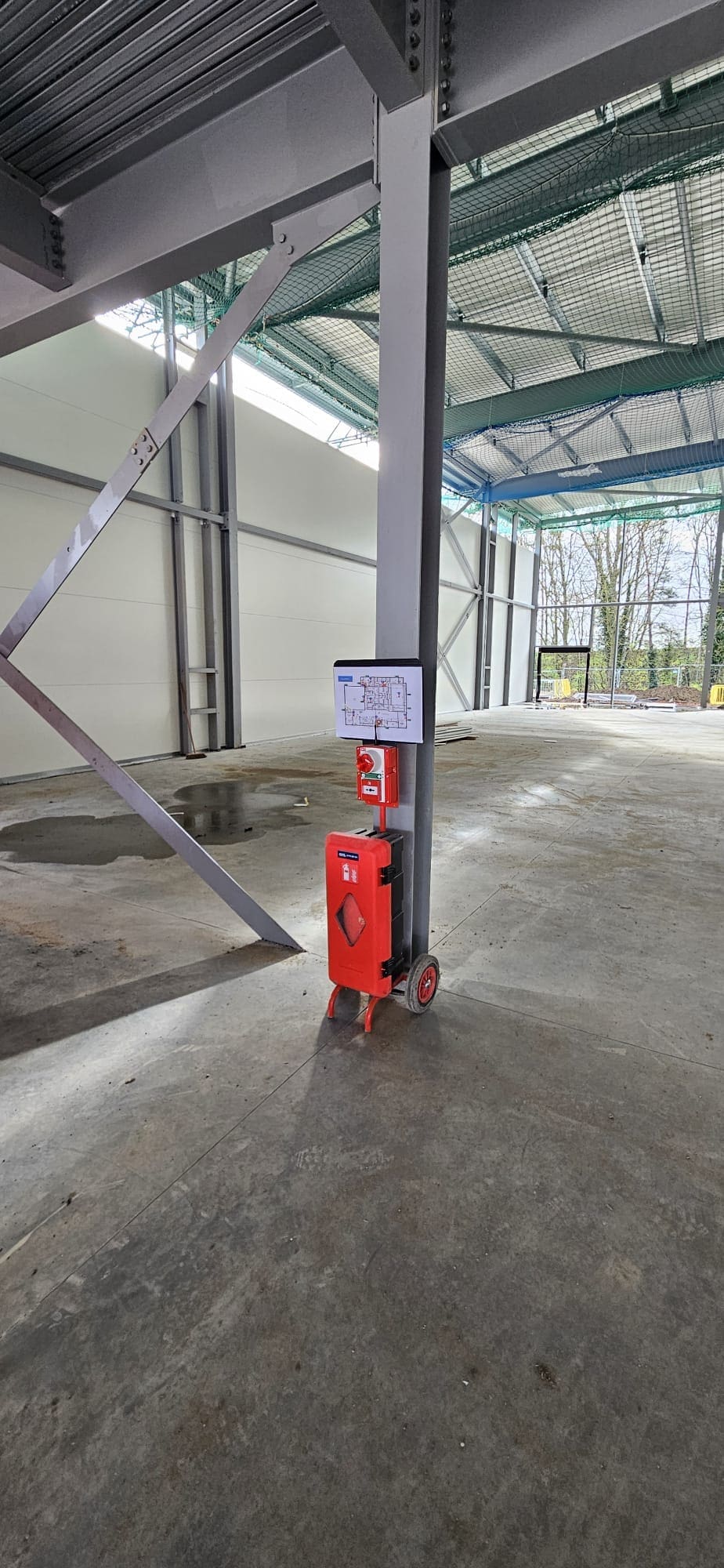
Fire and Arson Exposure Changes Through the Construction Programme
Security controls should be reviewed when the site layout, accessible areas or vulnerable materials change.
1. Mobilisation & Groundworks
Fuel, generators, temporary electrics, welfare units, fencing and external storage can dominate the risk picture while large parts of the site remain open and exposed.
2. Structure & Envelope
Scaffolds, temporary stairs, sheeting, internal levels and partially enclosed areas can create new routes of access and places where activity is less visible from the perimeter.
3. Fit-Out
Adhesives, packaging, finishes, services, charging equipment and more valuable completed areas may be introduced while multiple trades still require access and temporary arrangements remain in use.
4. Handover & Partial Occupation
Finished areas can sit beside active works, defects visits and remaining compounds. Responsibility for security, access permissions, alarms and temporary arrangements should remain clear during the transition.

Protect vulnerable external areas
Fuel Storage and Combustible Areas Need Security Consideration
Fuel storage is primarily a fire-safety and site-management issue, but it also has a clear security dimension. Access should be controlled according to the project arrangements, and damage, tampering, forced entry or unusual activity around storage areas should not be treated as routine.
The same principle applies to external waste, packaging, timber, temporary structures and other areas where deliberate interference could create a larger problem. Security patrols and cameras should not be positioned simply because an area contains fuel or combustible material; they should be based on the site assessment, likely routes of approach, visibility and agreed response.
The photograph shown here illustrates a defined fenced fuel-storage area beside construction plant. It is used to show the type of location that may need to be considered within the wider security plan, not to suggest that the particular arrangement is unsafe.
Security and emergency arrangements must work together
Access Control Must Not Compromise Emergency Escape
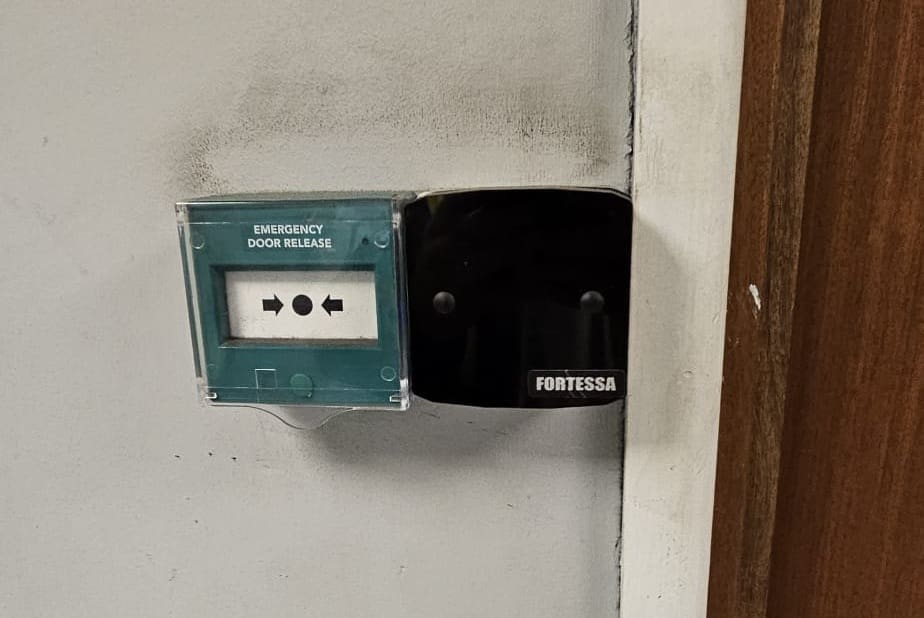
Construction projects can use gates, controlled doors, temporary access permissions and electronic access systems to keep unauthorised people out of restricted areas. Those security controls must operate alongside the project’s emergency arrangements and must not prevent people from reaching a place of safety when required.
From a security perspective, this means changes to access control should not be made in isolation. A door that becomes controlled, a new partition, an altered route or a partially handed-over area may affect both who is authorised to enter and how people leave in an emergency.
The photograph shows an emergency door release beside an electronic access-control reader. It is a useful example of why fire, emergency and security arrangements need coordinated management rather than separate decisions by different teams.
A Security Plan for Arson Risk Uses Several Layers
The purpose is to reduce unauthorised opportunity, identify abnormal activity early and ensure somebody knows what to do when a concern is reported.
1
Control Access
Maintain boundaries, gates and legitimate access procedures so unexpected attendance is easier to identify and vulnerable areas are not casually accessible.
2
Observe Vulnerable Areas
Use patrols, CCTV or suitable temporary detection around defined risks where abnormal out-of-hours activity needs to be identified or verified.
3
Report Change
Fresh damage, disturbed fire equipment, insecure fuel areas, damaged lighting or signs of entry should be reported rather than left for the next routine visit.
4
Escalate & Review
Agree who receives security information, what action is expected and when the wider plan must change after trespass, vandalism or deliberate damage, attempted ignition or another significant event.
What security personnel can realistically contribute
Guards and Patrols Can Observe and Escalate — They Are Not a Substitute for Fire-Safety Management
Security officers can add value where they have clear duties and know what should be treated as abnormal. Depending on the assignment, this can include checking gates and boundaries, observing known vulnerable areas, identifying signs of fresh entry, recording damage, reporting interference with fire points or extinguishers and escalating an insecure fuel or welfare area.
Mobile patrols can provide documented out-of-hours checks where permanent guarding is not proportionate. The patrol route should be based on the actual risk rather than a generic walk around the perimeter. If previous incidents have involved one gate, a particular storage area, a temporary building or an isolated elevation, those points should be reflected in the patrol instruction.
Security personnel should not be expected to carry out duties that belong to a competent fire-risk assessor or replace the project’s emergency plan, alarm testing, fire watch requirements, hot-work controls or statutory inspections. Their value is in observation, deterrence, access control, reporting and agreed security response.
After a Fire, Attempted Arson or Suspicious Incident
Any immediate fire, emergency or life-safety response comes first. Once the situation is under control and the relevant site and emergency procedures have been followed, the security circumstances should be reviewed while the details are still clear.
Useful questions include where the person approached from, whether entry was forced or opportunistic, whether CCTV or alarm information exists, whether lighting or detection had been interfered with, which areas were accessible and whether the incident revealed another weakness in the boundary or lock-up routine.
The review should also consider whether anything changed shortly before the incident: a moved compound, newly installed scaffold, an altered delivery gate, a shutdown, a newly enclosed floor or temporary removal of existing security equipment. Construction risk changes quickly, and a security arrangement that was proportionate several weeks earlier may no longer match the current site.
Where deliberate fire-setting is suspected, preserve relevant CCTV, incident records and other information in accordance with the project’s procedures and any request from the emergency services or police.
Concerned About Out-of-Hours Fire or Arson Risk?
Tell us about the site layout, vulnerable areas, recent trespass or damage, current security and the periods that need protection. We can discuss whether guarding, patrols, temporary detection, CCTV, response or a combined security arrangement is proportionate.
Related Construction Security Services
This page covers the security contribution to fire and arson risk reduction. The services below can support a live construction site where practical protection is required.
Related construction risk guidance: construction site theft prevention, construction site trespass prevention and construction site vandalism prevention.
Construction Site Security
Main construction-security hub covering guarding, access control, patrols, temporary systems, CCTV, response and changing project phases.
Temporary Security
Temporary alarms, CCTV and supporting arrangements for changing sites, vulnerable areas and short-term out-of-hours risks.
Mobile Patrols
Documented visits to inspect agreed gates, boundaries, compounds, vulnerable storage and other priority areas outside normal working hours.
Security Guarding
SIA-licensed officers for suitable assignments requiring physical presence, access control, patrol duties and immediate on-site judgement.
Site Security Audits
Structured reviews of boundaries, access routes, vulnerable areas, existing controls and practical weaknesses that may allow intrusion or deliberate interference.
Commercial CCTV
CCTV design and installation for entrances, boundaries, compounds and other locations where visual monitoring or recorded evidence is required.
Construction Site Fire Risk & Arson Prevention Questions
What is the security role in construction site fire prevention?
Security can reduce unauthorised access, observe vulnerable areas, deter deliberate interference and provide reporting or response when suspicious activity occurs. It does not replace the project’s fire risk assessment, emergency plan, alarm arrangements or other statutory fire precautions.
Why are construction sites vulnerable to arson?
Temporary boundaries, quieter out-of-hours periods, accessible waste or materials, fuel storage, partially completed buildings and changing access routes can create opportunities if unauthorised people are able to enter and remain unnoticed.
Can CCTV or temporary detection help reduce arson risk?
They can support deterrence, detection and verification when positioned around a defined security risk. Coverage, lighting, communications, normal site activity and the intended response should be considered before relying on a system.
Should fuel storage areas be included in security patrols?
Where the site assessment identifies them as a security priority, patrol instructions can include fuel storage and other vulnerable external areas. The officer’s role is normally to observe access, damage, tampering or abnormal conditions and follow the agreed escalation procedure.
Does fire and arson risk change during the construction programme?
Yes. Early phases may expose fuel, generators and temporary facilities, while later phases introduce more enclosed spaces, finished areas, services, packaging and new access arrangements. Both fire precautions and supporting security controls should be reviewed as the project changes.
Can access control affect emergency escape?
It can if security changes are not coordinated with the project’s emergency arrangements. Controlled doors and access permissions must not prevent people from using the required escape routes in an emergency. Fire and security arrangements should therefore be managed together.
What should happen after suspected arson or deliberate fire-setting?
The immediate fire and emergency procedures take priority. Afterwards, the security circumstances should be reviewed, including the route of approach, entry point, CCTV or alarm information, damaged controls and whether the security plan needs to change. Relevant evidence should be preserved in line with site procedures and any request from the police or emergency services.
Discuss Construction Site Fire and Arson Security Risk
If you are reviewing out-of-hours protection, have experienced trespass or deliberate damage, or need security around vulnerable areas, tell us about the project and the current concerns.
Site-specific construction enquiry
Tell Us About Your Construction Site
Provide the information currently available. We can then assess whether guarding, patrols, temporary systems, response arrangements or a combined service may be suitable.
Useful details include:
- Site address, postcode and current project phase
- Required hours, days, start date and duration
- Number of access points, compounds and vulnerable boundaries
- Fuel or combustible areas, temporary buildings, boundaries, fire points, access routes or other vulnerable locations
- Current security measures and recent incidents
- Required duties, reporting and escalation arrangements