
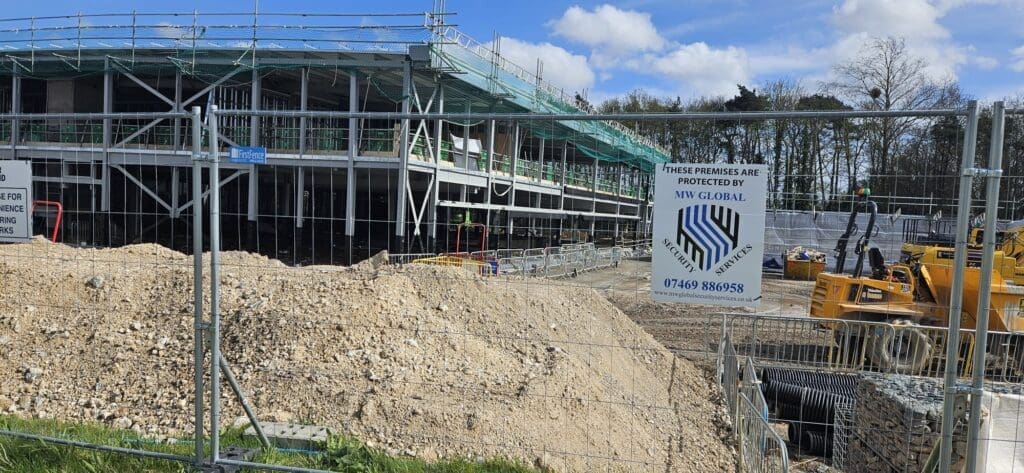
Construction security guidance • theft prevention • asset protection
Construction Site Theft Prevention
Practical guidance for reducing theft risk as plant, tools, fuel, materials and site conditions change throughout a construction project.
This guide explains common construction theft risks, the weaknesses that can create opportunity and how deterrence, detection, delay and response can work together. For site-specific protection, MW Global Security Services can assess the project and recommend a proportionate security arrangement.
Knowledge guidance supporting our main construction site security services page.
Changing Site Risk
Protection should evolve with the project
Plant, Tools & Materials
Different assets become exposed at different stages
Layered Protection
Deter • detect • delay • respond
20+ Years’ Experience
Practical security-industry knowledge
Why prevention matters
Construction Site Theft Is a Commercial and Operational Risk
Construction sites can contain high-value tools, plant machinery, fuel, cable, metals, generators, welfare equipment and building materials while relying on temporary boundaries and changing access arrangements.
The security problem also changes as the project moves forward. Plant may be the main concern during early works, while later phases can introduce installed electrical equipment, fixtures, cable, tools and valuable materials inside partially completed buildings.
The cost of an incident is rarely limited to the item taken. Replacement delays, emergency hire, rearranged deliveries, lost working time, investigation and disruption to booked trades can all affect the programme. A sensible theft-prevention plan should therefore consider both the asset and the consequence of losing it.
Common Construction Site Theft Risks
The main exposure depends on the site layout, location, project phase, operating hours and what is being stored or installed at the time.
Tool Theft
Power tools and specialist equipment can be attractive because they are portable, valuable and may be spread between vehicles, containers, work areas and partially completed buildings.
Plant Machinery
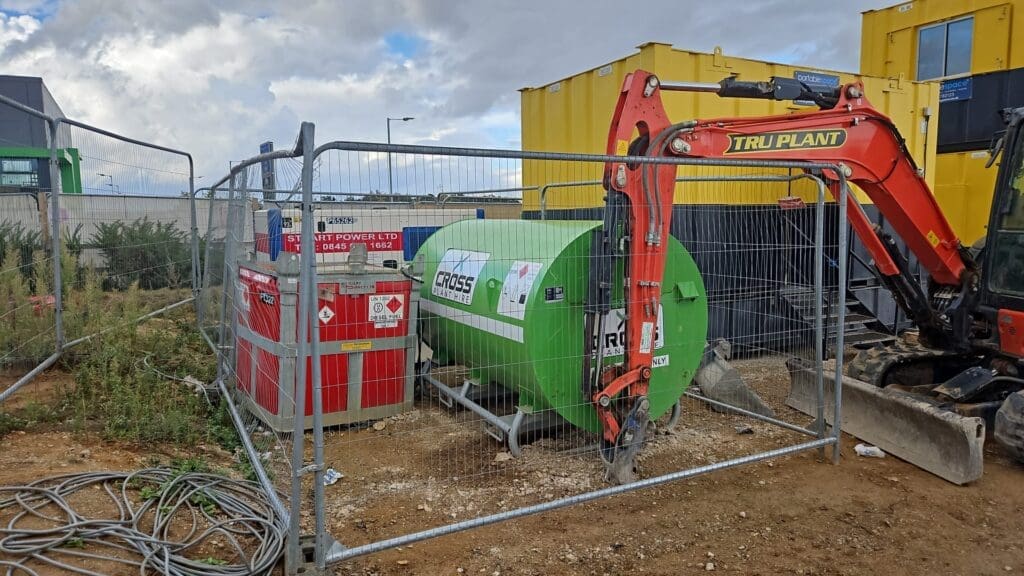
Construction plant and machinery theft can create substantial loss and disruption where access, immobilisation, storage and overnight protection are weak. Excavators, dumpers, telehandlers, compactors, generators and other plant should be considered individually.
Fuel
Fuel theft from construction sites can affect stored fuel, bowsers and machinery tanks during quiet periods, particularly where they sit close to an accessible boundary or can be reached without passing a controlled point.
Materials & Cable
Copper, cable, fixings, timber, insulation and other materials can interrupt several trades when removed before installation or during fit-out.
Unauthorised Access
Construction site trespass can expose weaknesses, create opportunities to identify valuable areas and lead to theft, damage or repeated intrusion even where nothing is taken on the first occasion.
Out-of-Hours Exposure
Evenings, weekends, bank holidays and shutdown periods can remove the natural supervision created by contractors, management and normal vehicle movement.
Why Construction Sites Are Frequently Targeted
A construction site combines valuable assets with temporary conditions. That combination can create opportunities that would not exist once the finished building is fully secured.
Temporary Conditions
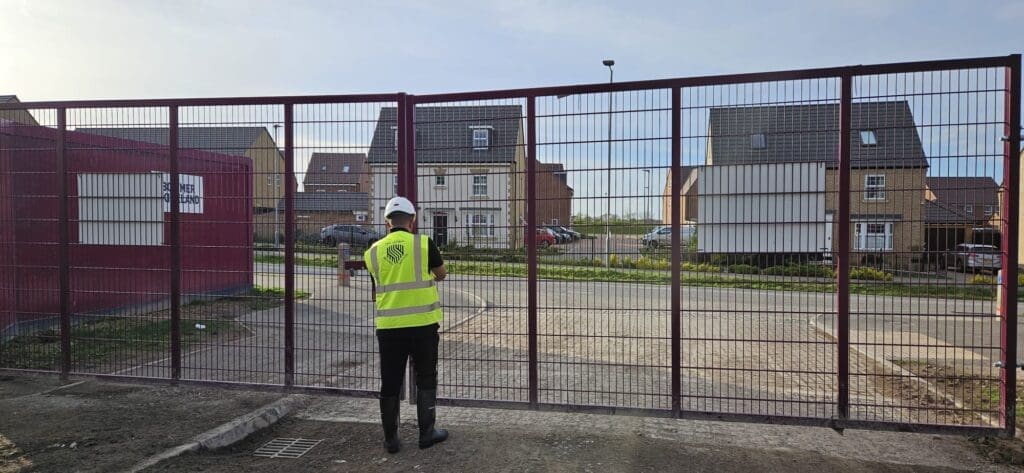
Heras fencing, temporary gates, cabins, containers, temporary power and changing vehicle routes can be perfectly workable during construction but require regular checking. A boundary that was secure last week may have been moved, opened or damaged by the next phase.
Poor lighting, isolated rear boundaries, open compounds and predictable storage areas can make entry or removal easier if they are not included in the current security plan.
Changing Assets and Activity
The value profile can change quickly. Groundworks may expose plant and fuel; structural work can introduce tools and temporary equipment; fit-out can bring cable, electrical components, fixtures and completed areas that need a different type of protection.
Security should also account for people and process. Contractors may leave gates open, deliveries can arrive at unusual times and storage arrangements can move without the security plan being updated.
What we look for in practice
Assessing Theft Risk Beyond the Main Gate
From our experience, the security arrangement that suits a project at mobilisation may no longer suit it several weeks or months later. Access routes change, fencing moves, storage areas are relocated and the assets worth protecting change with the build.
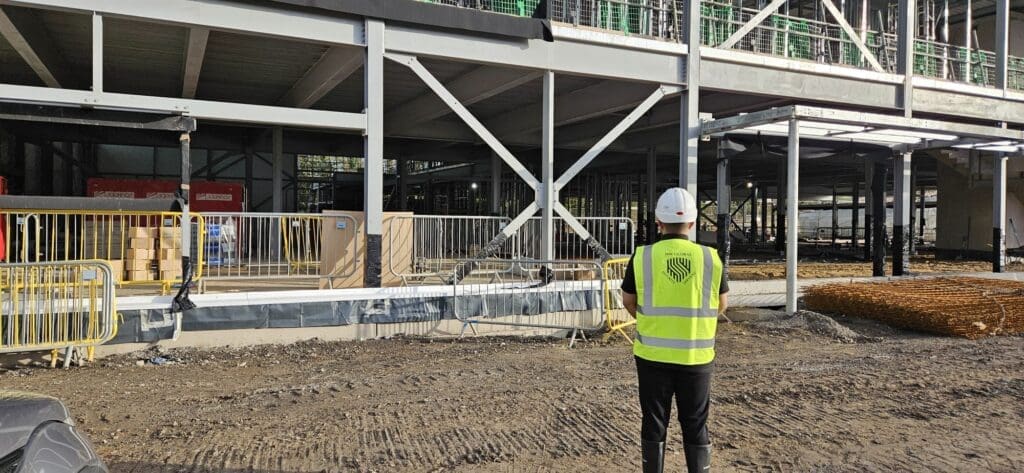
When reviewing a construction site, we look beyond the most obvious entrance. Rear and side boundaries, temporary access points, plant and material storage, welfare areas, lighting, CCTV blind spots, gate security and out-of-hours access all need to be considered. A site can look controlled from the front while remaining exposed elsewhere.
The practical question is not simply “what security is on site?” It is whether the current controls still match the current phase, assets and likely routes of approach. That is why theft prevention should be reviewed as the project develops rather than treated as a one-off setup.
The Real Cost of Construction Site Theft
The commercial effect can extend well beyond the replacement value of the stolen item.
Direct Loss and Recovery
Replacement plant, tools, fuel or materials may need to be sourced quickly. There can also be emergency hire, repairs to gates or fencing, damaged locks and time spent investigating or re-securing the site.
Programme and Operational Disruption
Booked trades may be unable to work, deliveries may need to be rearranged and managers may lose time dealing with insurers, suppliers, police, contractors and replacement arrangements. One incident can therefore affect several parts of the programme.
Effective Theft Prevention Uses More Than One Layer
A practical plan links deterrence, detection, delay and response so that each control supports the next.
1
Deter
Visible officers, marked patrols, cameras, lighting, signage and well-maintained boundaries can make the site look controlled rather than easy to test.
2
Detect
Temporary alarms, CCTV, motion detection, patrol checks and other measures can identify suspicious activity or intrusion before the loss becomes greater.
3
Delay
Secure fencing, gates, locks, protected compounds and sensible storage make access or removal harder and provide more time for detection and response to matter.
4
Respond
Named contacts, monitored systems, mobile response, keyholding or on-site officers need clear instructions so an alert leads to an appropriate action rather than uncertainty.
The correct balance depends on the project phase, value and portability of assets, boundary condition, working hours, site location, available infrastructure and the response that can realistically be provided.
When normal activity stops
Overnight, Weekend and Shutdown Risks
During normal working hours, contractor activity, site management, vehicle movement and deliveries create a degree of natural supervision. The same project can become much quieter and less observed after the workforce leaves.
Weekends, bank holidays and planned shutdowns can extend that exposure. Where incidents are not detected until the next working period, more time may be available for plant, fuel, tools or materials to be removed and for access points to be damaged.
Out-of-hours protection should therefore concentrate on the areas that remain vulnerable when normal activity stops, together with a clear method of verification and escalation if something occurs.
Temporary Security Systems for Changing Construction Sites
Temporary systems can be useful because they can be deployed, repositioned or removed as access, compounds and valuable areas move through the project.
Protection That Can Move With the Project
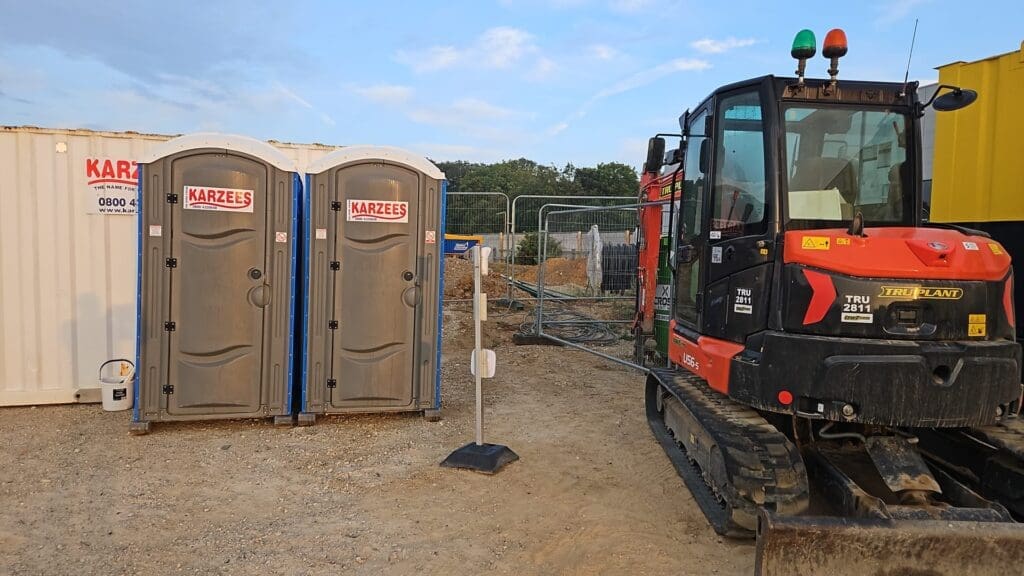
Temporary systems can follow moving compounds, new internal areas, changing access routes and different high-value assets as the build develops. A detector or camera that was well positioned at one stage may need to be moved when the site layout changes.
The objective is not to install equipment simply because it is available. Detection should cover a defined risk and be linked to suitable verification and a realistic response arrangement.
Temporary CCTV
Cameras can support vulnerable entrances, compounds, boundaries and storage areas where suitable power, connectivity, lighting and positioning are available.
Temporary Alarms
Wireless detection can help protect temporary buildings, internal areas, compounds or selected approaches where the environment and normal site activity make detection practical.
Verification & Response
Images, video, patrol attendance or on-site personnel can help establish what is happening. The response route should be agreed before the system is relied upon.
Concerned About Theft at a Live Construction Site?
Tell us the site location, current phase, vulnerable assets and the periods you are most concerned about. We can discuss whether guarding, patrols, temporary systems, CCTV, response or a combined arrangement is appropriate.
When Guards or Mobile Patrols Add Value
Technology can provide useful detection and evidence, but some sites also require physical presence, judgement and immediate action. Security officers can support access control, perimeter patrols, contractor checks, gatehouse duties, lock-up procedures and incident reporting where those duties form part of the agreed assignment.
Mobile patrols can suit sites that do not need a permanent officer but still require documented out-of-hours checks. Patrols can inspect gates, fencing, locks, compounds, welfare areas and other agreed points while looking for damage, attempted access or signs that the risk has changed.
The important point is that guarding or patrols should have a defined purpose. Their role should fit the site and work alongside the other controls rather than simply being added because “more security” sounds better.
Related Construction Security Services
Use this guide for theft-prevention information. The pages below explain the professional services that can be combined when a live site needs practical protection.
Related construction risk guidance: construction site trespass prevention, construction site vandalism prevention and construction site fire risk and arson prevention.
Construction Site Security
Main construction-security hub covering guarding, access control, patrols, temporary systems, CCTV, response and changing project phases.
Temporary Security
Temporary alarms, CCTV, patrol and guarding options for changing sites, vulnerable compounds and short-term project risks.
Mobile Patrols
Scheduled or varied visits to inspect agreed gates, boundaries, compounds and vulnerable areas outside normal working hours.
Security Guarding
SIA-licensed officers for suitable assignments requiring a visible presence, access control, patrol duties and immediate on-site judgement.
Commercial CCTV
CCTV design and installation for entrances, compounds, boundaries and other areas where visual monitoring or recorded evidence is required.
Keyholding & Alarm Response
Agreed keyholding, escalation and trained response attendance for suitable alarm or security events where the location and service arrangement allow it.
Construction Site Theft Prevention Questions
What is construction site theft prevention?
It is the process of reducing opportunities to steal plant, tools, fuel, materials and other valuable assets by combining suitable physical security, detection, access control, procedures and response arrangements around the actual site risk.
Why are construction sites vulnerable to theft?
Construction sites can combine valuable assets with temporary fencing, changing access points, temporary buildings and periods with limited supervision. The exact vulnerability changes as the project progresses.
Can CCTV stop construction site theft?
CCTV can deter activity, provide monitoring and support verification or investigation, but it should not be treated as a complete solution by itself. Coverage, lighting, recording, monitoring and the response after an alert all need to be considered.
Are temporary alarms suitable for building sites?
They can be suitable because wireless detection can often be repositioned as the site changes. The environment, normal activity, signal conditions, power or communications and the intended response should be reviewed before deployment.
When might a construction site need security guards?
Guarding may be appropriate where the site needs access control, continuous physical presence, immediate on-site judgement, defined patrol duties or protection during higher-risk periods. The requirement should be based on the site and agreed duties rather than a blanket assumption that every project needs a permanent guard.
Should theft prevention change during the construction programme?
Yes. Boundaries, access points, working hours, contractors and high-value assets can all change. Reviewing the security arrangement at key project stages helps keep the controls aligned with the current risk.
Discuss Construction Site Theft Risk
If you need site-specific advice rather than general guidance, tell us where the project is, its current phase, the vulnerable assets and the periods that need protection.
Site-specific construction enquiry
Tell Us About Your Construction Site
Provide the information currently available. We can then assess whether guarding, patrols, temporary systems, response arrangements or a combined service may be suitable.
Useful details include:
- Site address, postcode and current project phase
- Required hours, days, start date and duration
- Number of access points, compounds and vulnerable boundaries
- Plant, tools, fuel, materials and other high-value areas
- Current security measures and recent incidents
- Required duties, reporting and escalation arrangements