
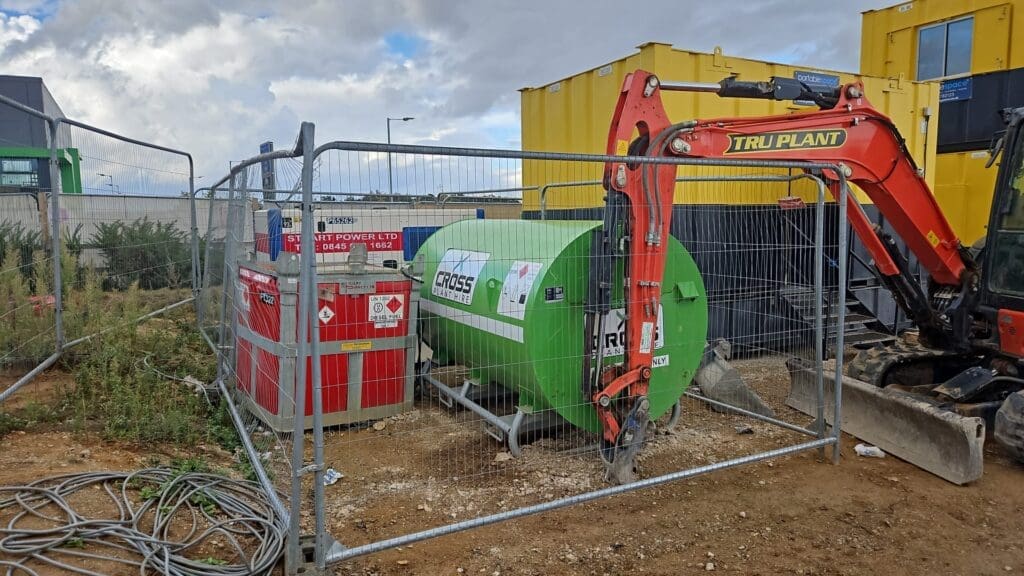
Construction security guidance • fuel theft • bowsers • plant • storage
Fuel Theft From Construction Sites
Practical measures for reducing fuel theft risk around bowsers, storage tanks, generators, plant and other vulnerable construction assets.
Fuel theft can cause more than the cost of replacement diesel. Damage to tanks or fuel lines, spill response, lost plant availability and interrupted work can all affect the project. The security plan should therefore protect both the fuel and the operations that depend on it.
Fuel-specific guidance supporting our main construction site security services page.
Bowsers & Tanks
Protect stored fuel and filling points
Plant & Generators
Fuel loss can disable critical equipment
Out-of-Hours Risk
Quiet periods remove natural supervision
Layered Response
Deter • detect • delay • respond
Why fuel needs its own security plan
Fuel Theft Is an Operational as Well as Financial Risk
Construction sites may hold fuel in dedicated tanks or bowsers and within excavators, telehandlers, dumpers, generators and other plant. Those assets are often spread across a changing site rather than contained in one permanent secure building.
The immediate loss is the fuel itself, but an incident can also leave damaged caps, pumps, lines or tanks, create a spill requiring safe management, and take machinery out of service while the problem is investigated or repaired.
That makes fuel security part of project continuity. Storage location, access control, plant parking, close-down routines, detection and response should be reviewed together rather than treated as separate issues.
Current Red-Diesel Rules and Construction Sites
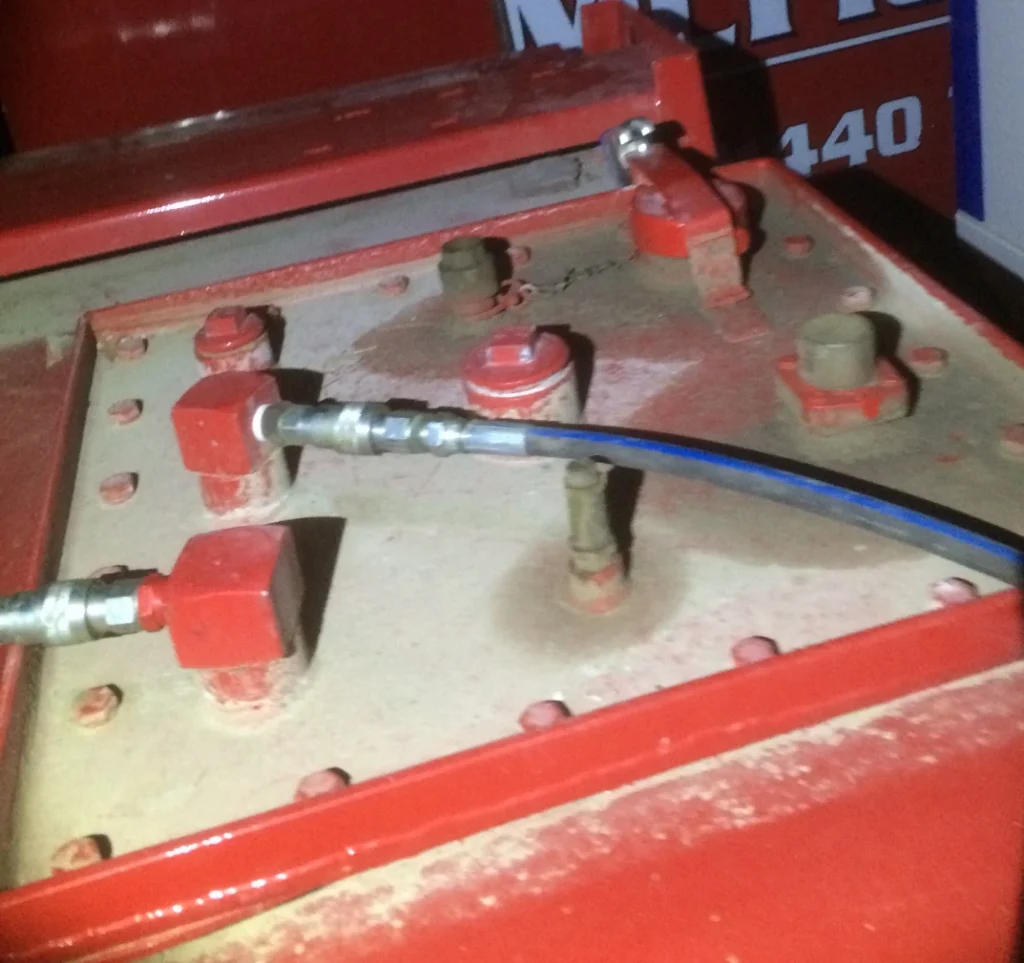
The fuel-duty rules changed on 1 April 2022. Entitlement to use rebated diesel—commonly called red diesel—was restricted for most sectors. For construction businesses, however, it is better to describe the position accurately than to say that every construction machine is simply “banned from red diesel”. Eligibility depends on the vehicle or machine and the qualifying purpose for which it is being used.
HMRC’s current guidance should be checked whenever fuel entitlement matters to a particular machine or activity. See Using rebated fuels in vehicles and machines (Excise Notice 75).
Security point: whatever fuel is lawfully used on the project, theft prevention should be based on the quantity stored, where it is kept, how plant is left out of hours, who can access it and what happens when suspicious activity is detected. This page does not provide fuel-duty or tax advice.
Common Fuel-Theft Exposures on Construction Sites
Bowsers and Storage Tanks
Fuel stores positioned near an accessible boundary, left in an isolated compound or protected by only one easily defeated control can become a focused target during quiet periods.
Plant and Machinery Tanks
Plant left across a large site may be harder to supervise than a central fuel store. Overnight parking arrangements and key control should therefore form part of the same security review.
Generators and Temporary Equipment
Temporary power equipment can sit away from the main gate or site office. Its location, fuel supply and surrounding access routes should be included in patrol and detection planning.
Damage and Spillage
An attempted theft can cause damage even when little fuel is removed. Security planning should recognise the potential for damaged tanks, fittings or lines and the need to escalate spills safely.
Process and Accountability Gaps
Poor fuel records, uncontrolled access, unclear authority and weak close-down procedures can make unusual fuel movement harder to identify. The controls should support accountability without replacing normal site management.
The Cost Is Not Limited to the Diesel
Plant Downtime
Machinery may be unavailable until it is refuelled, inspected or repaired, affecting planned work and following trades.
Damage and Repair
Forced access to tanks or lines can turn a fuel-theft incident into an equipment-repair issue as well.
Spill Management
Leaks or spills require safe management under the site’s environmental and emergency arrangements. Security staff should escalate rather than improvise outside their role.
Programme Disruption
Investigation, replacement deliveries, emergency hire and rescheduling can create a larger operational effect than the value of the fuel alone.
Reducing Fuel-Theft Risk With Layered Controls
The strongest arrangement normally combines physical controls, site procedures, detection and an agreed response rather than relying on one device or one person.
1. Place and Protect the Fuel
Choose storage and parking locations deliberately. Avoid leaving fuel assets exposed solely because they are convenient for daytime operations. Use suitable physical security and keep access routes in view of the wider site plan.
2. Control Access and Keys
Define who can access fuel stores, bowsers and plant, how keys are controlled, and how unusual collections or movements are authorised and recorded.
3. Detect Exceptions
Use patrols, suitable lighting, temporary detection or CCTV where they add value. Coverage should be based on the real access routes and assets rather than simply placing cameras at convenient mounting points.
4. Agree the Response
Decide who receives an alert, who can attend, what officers should record, when site management is contacted and when police or other emergency services should be called.
How Security Services Can Support Fuel-Theft Prevention
Security Guarding
Where continuous presence is justified, an officer can control access, patrol agreed fuel and plant areas, record exceptions and respond immediately to incidents identified during the guarding period.
Mobile Patrols
Dedicated visits can check gates, fencing, storage areas, bowsers and signs of interference where a permanent officer is not required.
Temporary Detection & CCTV
Temporary sensors or cameras can protect selected compounds and approaches where power, communications, environment and response arrangements make them suitable.
Alarm Response
Where appropriate, keyholding and an agreed attendance procedure can provide a defined response route after an actionable alarm event.
Site Security Also Supports Control of Unauthorised Access
Fuel theft prevention sits within the wider construction-security picture. HSE guidance under CDM 2015 states that principal contractors must take reasonable steps to prevent unauthorised access to the site, and site boundaries should be planned, provided and maintained to reflect the nature of the project and its surroundings.
See HSE guidance on protecting the public and managing site access. Security services can support those arrangements, but they do not replace the duties of the client, principal contractor or other CDM dutyholders.
For broader unauthorised-access guidance, see construction site trespass prevention.
After a Fuel Theft or Attempted Theft
- Protect people first and follow the site’s emergency arrangements where damage, a leak or another immediate hazard is present.
- Preserve relevant CCTV, access records, patrol information, photographs and observations without disturbing evidence unnecessarily.
- Report suspected crime through the appropriate police route and follow the project’s insurer/client reporting procedures.
- Review how access was gained, what was targeted, whether controls worked as expected and what should change before normal routines resume.
- Reassess nearby plant, tools, materials and storage because a fuel incident may reveal a wider site-security weakness.
Related Construction Theft Guidance
Construction Site Security
The main service hub for guarding, patrols, access control, temporary systems, CCTV and response.
Construction Theft Prevention
Broader theft-prevention guidance covering plant, fuel, tools, cable, metals and materials across changing project phases.
Plant & Machinery Theft
Focused guidance on high-value plant, machinery, tools, storage, access and project continuity.
Fire & Arson Risk
Security guidance for vulnerable fuel or combustible areas, deliberate fire-setting and out-of-hours exposure.
Fuel Theft From Construction Sites FAQs
Can construction sites still use red diesel?
Entitlement to use rebated fuel is restricted and depends on the vehicle or machine and the qualifying purpose. Do not rely on a general statement that every construction machine either can or cannot use red diesel. Check HMRC’s current Excise Notice 75 for the specific use.
What fuel assets should be included in a security assessment?
The assessment may include storage tanks, bowsers, generators, plant fuel tanks, filling points, key control, access routes, lighting, nearby boundaries and the periods when those areas are least supervised.
Will CCTV alone prevent fuel theft?
No single measure can guarantee prevention. CCTV may support deterrence, detection and evidence, but it is most useful when coverage, alerts, monitoring and the expected response have been planned around the actual site.
Can security guards patrol fuel storage areas?
Yes, where that forms part of the agreed assignment instructions and can be done safely. Checks should focus on defined observations such as access, signs of interference, abnormal conditions and escalation rather than asking security staff to perform fuel-handling or engineering duties.
Can mobile patrols be used instead of a permanent guard?
They can suit some sites, but the decision depends on risk, location, access, response time, previous incidents and what remains on site. High-risk or repeatedly targeted locations may justify a different level of protection.
Should fuel security change during the project?
Yes. Fuel volumes, plant locations, site boundaries, compounds, access routes and working hours can all change. Review protection when the project phase or storage arrangement changes rather than waiting for an incident.
Discuss Fuel-Theft Risk on Your Construction Site
Tell us where the project is, what fuel or plant remains on site, the operating hours, current controls and any recent incidents. We can then assess the security requirement around the wider site risk.
Site-specific construction enquiry
Tell Us About Your Construction Site
Provide the information currently available. We can then assess whether guarding, patrols, temporary systems, response arrangements or a combined service may be suitable.
Useful details include:
- Site address, postcode and current project phase
- Required hours, days, start date and duration
- Number of access points, compounds and vulnerable boundaries
- Plant, tools, fuel, materials and other high-value areas
- Current security measures and recent incidents
- Required duties, reporting and escalation arrangements