
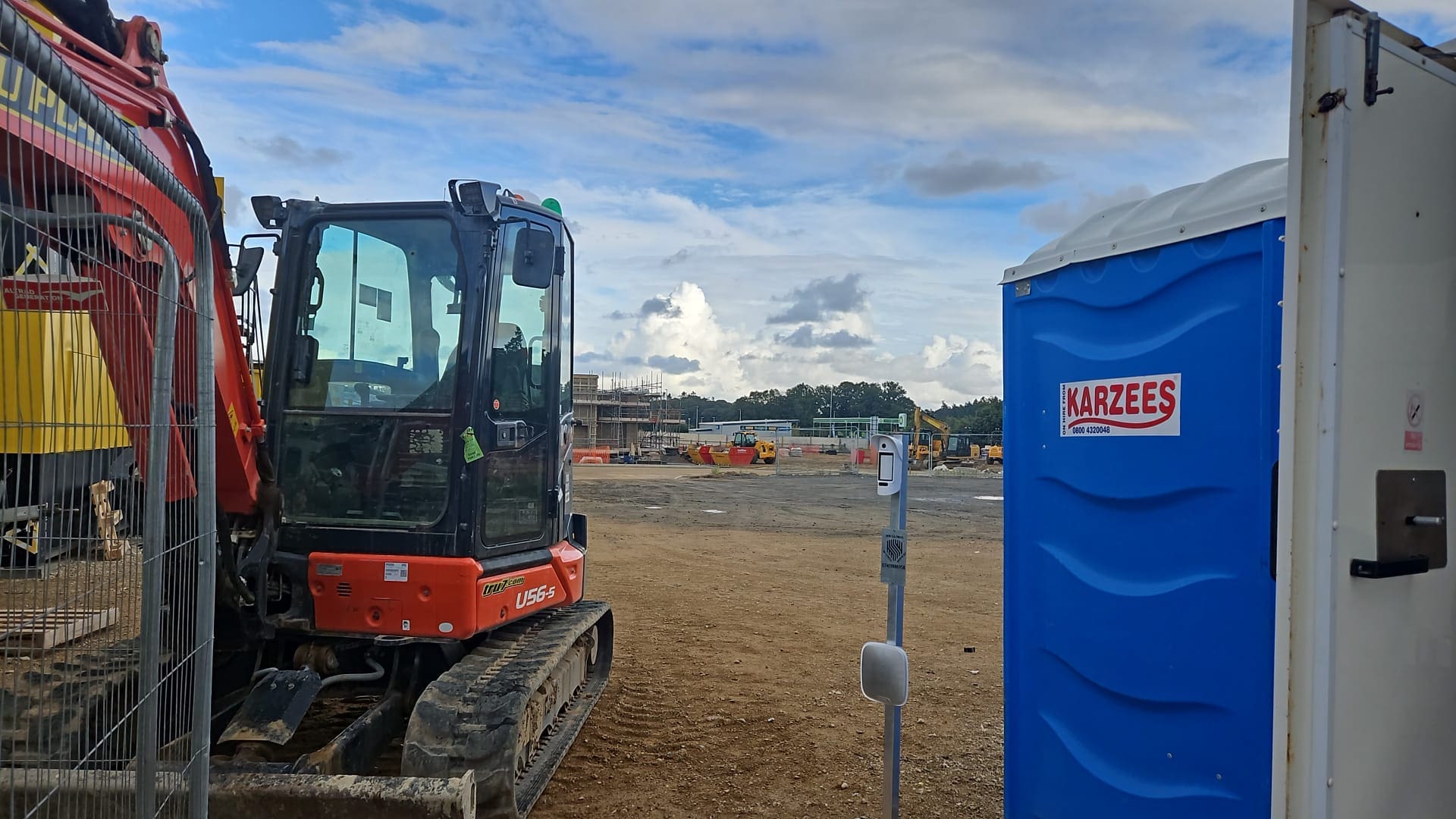
Construction security guidance • trespass prevention • perimeter control
Construction Site Trespass Prevention
Practical guidance for reducing unauthorised access, repeated intrusion and unsafe entry as construction boundaries and access routes change.
This guide looks at why people enter construction sites, the weak points that can allow access and how boundary control, detection, patrols and response can reduce the opportunity for trespass. For a live site, MW Global Security Services can assess the actual layout and recommend a proportionate security arrangement.
Knowledge guidance supporting our main construction site security services page.
Boundary Integrity
Gates and fencing need regular checking
Public Interface
Footpaths, roads and neighbouring areas matter
Early Detection
Repeated access should not become normal
20+ Years’ Experience
Practical security-industry knowledge
Why prevention matters
Construction Site Trespass Is More Than a Nuisance
Unauthorised entry can expose people to incomplete structures, excavations, scaffold routes, temporary electrics, machinery, open edges and other conditions that are controlled for authorised workers but not for members of the public.
It can also lead to damaged fencing, forced gates, vandalism, theft opportunities, interference with equipment or repeated boundary testing. The reason for entry may be curiosity, anti-social behaviour, urban exploration, attempted theft, protest activity or simply an accessible route into a site that looks unobserved.
The aim of trespass prevention is therefore not simply to add more fencing. It is to understand how somebody could reach the site, where they could enter, what might attract them further inside and what should happen when unauthorised access is detected.
Common Construction Site Trespass Risks
The pattern of unauthorised access depends on the site, its surroundings, the project phase and how well the boundary is controlled at different times of day.
Public Access & Curiosity
Members of the public, young people or curious individuals may test an open gate, damaged fence line or visible gap without fully understanding the hazards beyond it.
Urban Exploration
Partially completed buildings, roofs, scaffolds and elevated structures can attract people looking for access to restricted or visually interesting areas.
Out-of-Hours Intrusion
Evenings, weekends and shutdowns can remove the natural supervision created by workers, managers, deliveries and normal site movement.
Repeated Boundary Testing
Loose clips, moved panels, damaged hoarding or recurring access at the same point can indicate that a boundary weakness is known and being reused.
Reconnaissance for Crime
Unauthorised entry can sometimes expose storage areas, plant, tools, access routines or other information that may support later theft or deliberate damage.
Targeted or Disruptive Access
Some projects may face deliberate entry intended to interrupt work, draw attention to the site or reach a particular area. The response should be planned around the actual risk rather than assumed.
Why Construction Sites Can Attract Unauthorised Access
Temporary boundaries, visible unfinished structures and changing access arrangements can make a site look easier to test than a completed occupied building.
Temporary and Changing Boundaries
Heras panels, temporary gates, hoarding, delivery openings and altered vehicle routes can all be appropriate during construction, but they need repeated checking as the project develops. A route that was secure before a delivery or phase change may later be left vulnerable.
The Site Meets the Public Realm
Roads, footpaths, residential boundaries, schools, retail areas, open land and shared access can place members of the public close to temporary site edges. These interfaces often need more attention than an isolated boundary that nobody normally approaches.
What we look for in practice
Follow the Likely Route of Entry, Not Just the Fence Line
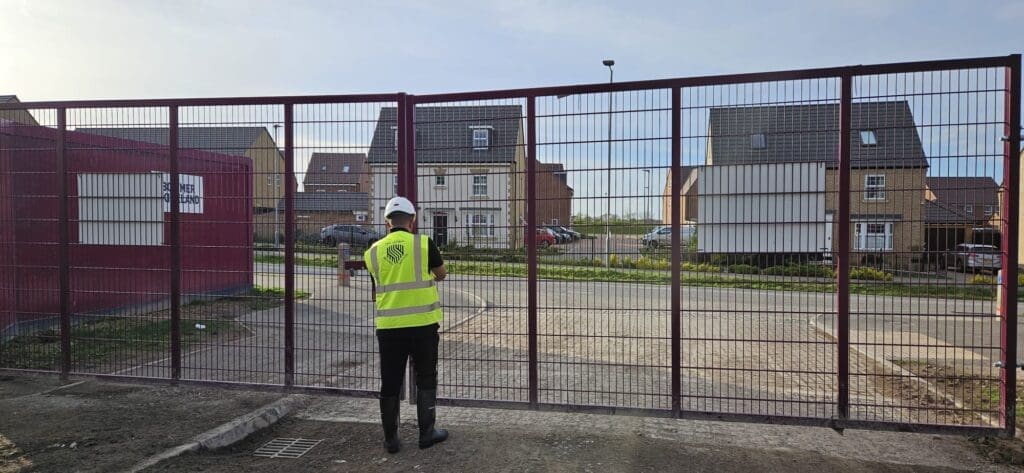
From our experience, perimeter security is most useful when it is reviewed from the outside in. We look at how somebody could approach the site, where they could pause without being noticed, what part of the boundary is easiest to test and what would allow them to move further into the project.
That means checking more than the main gate. Side and rear boundaries, joins between hoarding and fencing, pedestrian routes, scaffold access, temporary doors, low roofs, stacked materials, vegetation, lighting and objects that could act as climbing aids can all affect the practical route into a site.
Where a breach has already occurred, the exact point and method of entry matter. Simply repairing a panel without understanding why that location was chosen can leave the same weakness available again.
Early Signs of Repeated Trespass Should Be Taken Seriously
A small boundary defect can become a recurring access route if it is not identified, repaired and monitored.
Physical Signs
Moved panels, loose clips, bent fencing, forced locks, damaged hoarding, footprints, discarded items or repeated disturbance near the same boundary point can indicate unauthorised access.
Behavioural Pattern
Repeated sightings, people watching the site, attempts at similar times or movement towards the same scaffold, compound or unfinished area can help identify where deterrence or detection needs strengthening.
Security note: measures intended to deter or detect trespass support site security, but they do not replace the principal contractor’s statutory construction health and safety responsibilities or required physical safety controls.
Risk changes with the programme
Trespass Risk Changes as the Construction Site Develops
A site that is difficult to enter during one phase can become easier to access after scaffolding, temporary stairs, new openings or altered boundaries are introduced. Trespass prevention should therefore be reviewed alongside the construction programme rather than treated as a fixed setup.
Mobilisation & Groundworks
New boundaries, delivery openings, plant routes and incomplete lighting can create obvious opportunities for people to test the site edge. Early checks should concentrate on whether gates and temporary fencing still match the way vehicles and workers are actually entering the project.
Structure & Scaffold
As the structure rises, trespass can become a vertical-access problem as well as a perimeter problem. Scaffolds, temporary stairs, ladders, low roofs and incomplete floors can provide routes into elevated or restricted areas that were not present earlier in the build.
Enclosure & Fit-Out
Once doors, glazing and internal areas appear, the building can look more complete from outside while still containing temporary access arrangements. More trades, changing internal routes and partially secured rooms can make it harder to distinguish authorised movement from intrusion.
Handover & Partial Occupation
Completed areas, snagging access, contractors returning for defects and changes in responsibility can create a mixed environment. Boundaries, keys, passes and temporary routes should be reviewed so that areas moving towards occupation do not leave an unintended route back into contractor-controlled space.
The useful question at each stage is: has the likely route of unauthorised entry changed since the last security review? If the answer is yes, fencing, lighting, detection, patrol instructions or access procedures may also need to change.
A Practical Trespass-Prevention Plan Uses Several Controls
The objective is to make the boundary clear, keep authorised movement controlled, detect abnormal activity and deal with any breach quickly.
1
Define the Boundary
Suitable fencing, hoarding, gates and warning signage should make it clear where public access ends and the controlled site begins.
2
Control Legitimate Access
Workers, visitors, contractors, deliveries and temporary access arrangements should have clear procedures so unexpected movement is easier to recognise.
3
Detect Unauthorised Entry
CCTV, alarms, suitable detection, lighting and patrol checks can help identify activity at vulnerable points before repeated access becomes established.
4
Respond, Repair & Review
A breach should trigger an agreed response, prompt repair of the access point and a review of whether the surrounding security arrangement also needs to change.
Public-facing and elevated access
Footpaths, Neighbours, Scaffolds and Partially Completed Structures Need Different Thinking
A boundary beside a public footpath, residential street, school route, retail area or shared access road can be approached naturally without somebody appearing unusual. That makes clear separation, good visibility and regular inspection particularly important.
Once inside, unfinished structures can create a second problem. Stair cores, scaffold towers, temporary ladders, roof access, service openings and partially completed floors may draw people deeper into areas they are not equipped to enter safely. Trespass prevention should consider both the initial boundary and the routes that become attractive after that boundary is crossed.
As the project changes, those routes can change too. A scaffold strike, new pedestrian route, removed hoarding panel or newly completed elevation may alter the risk even when the main gate arrangements remain unchanged.
Where a site sits close to housing, schools or frequently used public routes, the first assumption should not be that every approach is criminal. Curiosity and shortcut-seeking can still create serious consequences on an active site. Clear boundaries, secure gates, warning signs, good visibility and removal of easy climbing opportunities help make the separation between public space and controlled construction space unambiguous.
After unauthorised access
Treat the Entry Route as Evidence, Not Just a Repair Job
After a trespass incident, making the immediate opening secure is important, but the site should also establish how the person approached, entered and moved once inside. That information helps prevent the same route being reused.
1. Record the Actual Breach
Note the location, time, damage, likely method of entry and any CCTV, alarm or patrol information available. Repeated incidents at a similar time or place may reveal a pattern that is not obvious from the damaged panel alone.
2. Secure the Immediate Weakness
Repair or secure the affected gate, fence, hoarding or temporary opening promptly, but also check adjoining panels, locks and nearby access points. One visible defect can sometimes sit beside a wider section of boundary that is equally easy to test.
3. Check Where the Route Led
Look beyond the entry point. Scaffold access, compounds, welfare units, internal stairs, completed areas and other restricted spaces may show whether the person simply crossed the boundary or deliberately travelled towards a particular part of the project.
4. Change the Security Brief
If the incident exposes a new risk, update patrol checkpoints, detection coverage, lighting, gate procedures or escalation instructions. Where police, insurer or client reporting is required, retain the relevant records and follow the site’s agreed incident procedure.
A repaired fence is only one part of the response. The stronger outcome is a site that understands why that route was attractive and what now needs to change to make a repeat less likely.
Detection around vulnerable approaches
Temporary Security Can Support Changing Trespass Risks
Temporary cameras and wireless detection can be useful where a permanent system is not yet practical or where the vulnerable route moves as the construction programme changes. Equipment can be positioned around agreed entrances, approaches, compounds, temporary buildings or internal areas where unauthorised movement is a concern.
The important point is what happens after detection. Notification, verification and escalation should be agreed before equipment is relied upon, and nuisance activations should be considered when devices are placed around a live construction environment.
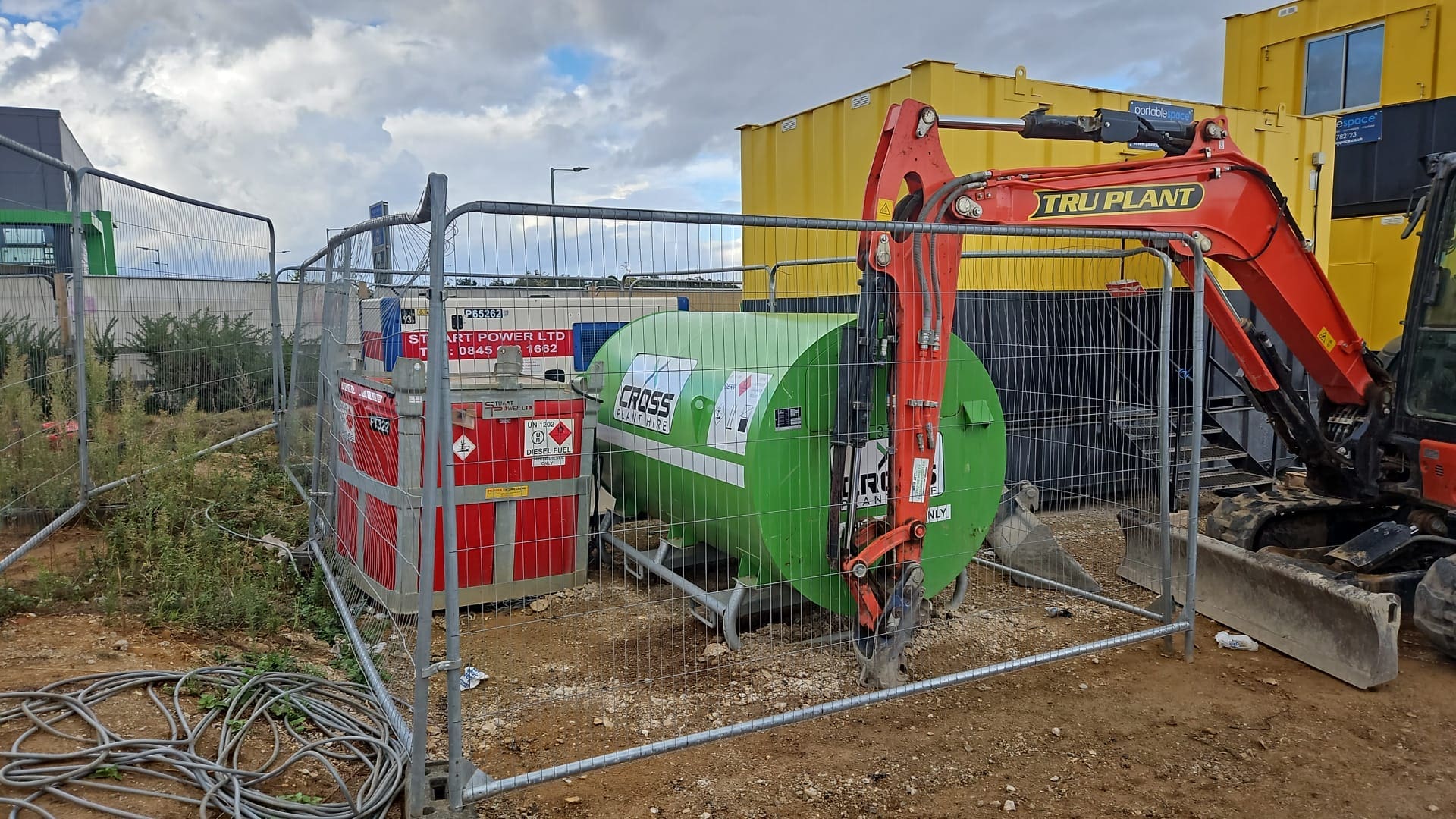
Repeated Trespass at a Live Construction Site?
Tell us where access is occurring, what the surrounding boundary looks like, when incidents are happening and what security is already in place. We can discuss whether patrols, guarding, temporary detection, CCTV, response or a combined arrangement is appropriate.
When Guards or Mobile Patrols Add Value
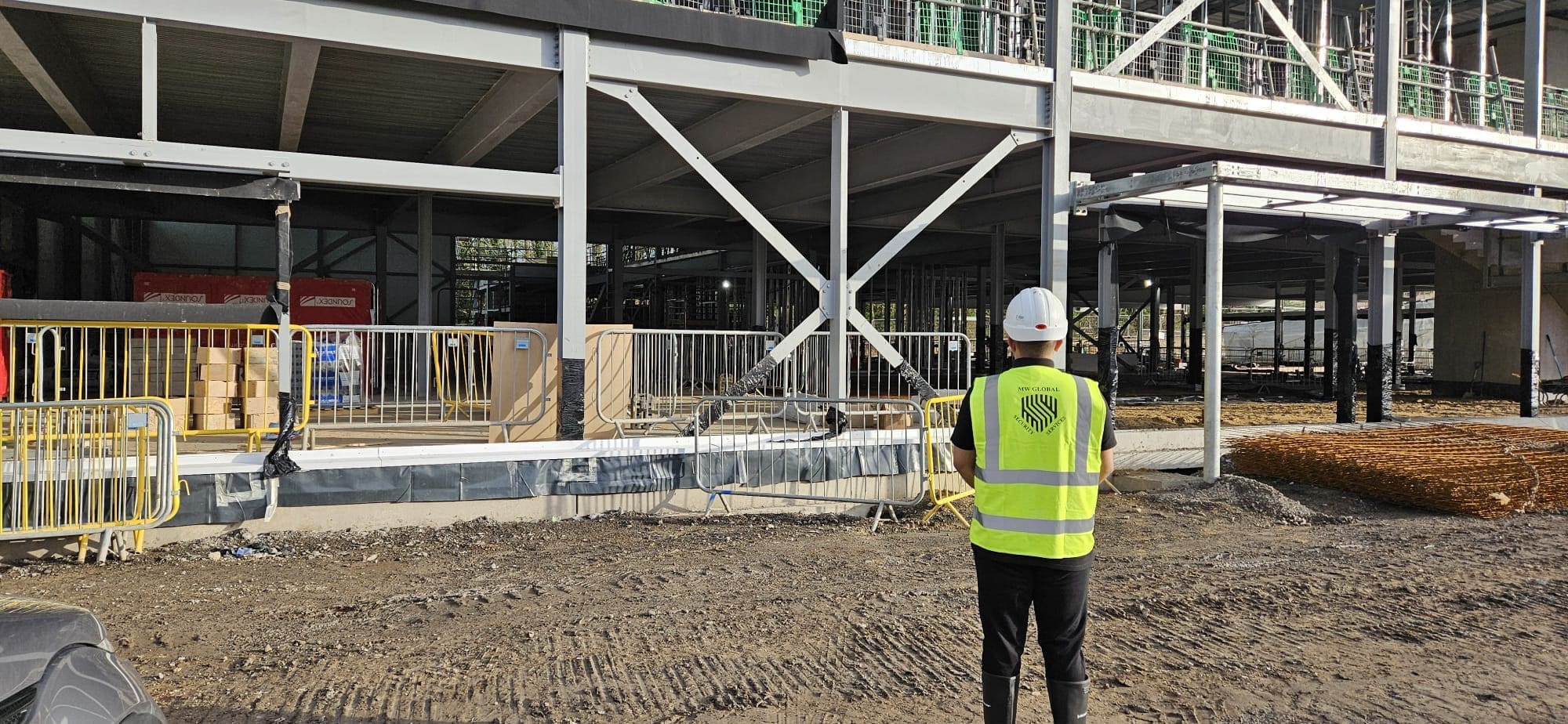
Some sites need more than remote detection. Security officers can provide a visible presence, manage access, challenge unexpected attendance within their agreed duties, carry out perimeter checks and respond immediately to activity that occurs while they are on site.
Mobile patrols can be useful where a permanent officer is not proportionate but the site still benefits from documented out-of-hours inspections. Patrols can check gates, fencing, locks, compounds and known vulnerable points, record damage and escalate signs of fresh access.
The role should be clearly defined. A patrol is most useful when the officer knows which points are vulnerable, what has changed since the previous visit and what action is required if a breach is found.
Related Construction Security Services
Use this guide for trespass-prevention information. The pages below explain the professional services that can support a live construction site where practical protection is required.
Related construction risk guidance: construction site theft prevention, construction site vandalism prevention and construction site fire risk and arson prevention.
Construction Site Security
Main construction-security hub covering guarding, access control, patrols, temporary systems, CCTV, response and changing project phases.
Temporary Security
Temporary alarms, CCTV, patrol and guarding options for changing sites, vulnerable entrances and short-term intrusion risks.
Mobile Patrols
Documented visits to inspect agreed gates, boundaries, compounds and vulnerable areas outside normal working hours.
Security Guarding
SIA-licensed officers for suitable assignments requiring physical presence, access control, patrol duties and immediate on-site judgement.
Site Security Audits
Structured reviews of boundaries, access routes, assets, existing controls and practical weaknesses that may allow intrusion.
Commercial CCTV
CCTV design and installation for entrances, boundaries, compounds and other locations where visual monitoring or recorded evidence is required.
Construction Site Trespass Prevention Questions
What is construction site trespass prevention?
It is the process of reducing opportunities for unauthorised people to enter a construction site by combining suitable boundaries, controlled access, detection, inspection, procedures and response arrangements around the actual site risk.
Why do people enter construction sites without permission?
Reasons can include curiosity, anti-social behaviour, urban exploration, attempted theft, vandalism, protest activity or simply an obvious access opportunity. The likely motivation can affect which controls are most appropriate.
Which parts of a construction site are most vulnerable to trespass?
There is no universal answer. Gates, damaged fencing, joins in hoarding, rear boundaries, scaffold access, temporary pedestrian routes and areas beside public paths or roads can all require attention depending on the layout.
Can CCTV or temporary alarms help with trespass?
They can support deterrence, detection and verification when positioned around a defined risk. Coverage, normal site activity, lighting, communications and the intended response should be considered before relying on them.
When might a construction site need security guards?
Guarding may be appropriate where continuous physical presence, access control, immediate on-site judgement or defined patrol duties are required. The decision should be based on the actual site, duties and risk rather than assumed for every project.
What should happen after a trespass breach?
The immediate incident should be dealt with under the agreed response procedure, the access point should be made secure and the route of approach and movement should be reviewed. Record the location, time, damage and any CCTV, alarm or patrol information, then consider whether adjoining boundaries, lighting, detection or patrol instructions also need to change. Repeatedly repairing the same point without understanding why it was selected may leave the wider weakness unresolved.
Does trespass risk change during the construction programme?
Yes. Groundworks, scaffold erection, structural work, enclosure, fit-out and handover can each create different routes of approach and different areas of interest. Boundaries, temporary stairs, ladders, gates, internal access and partially completed areas should be reviewed as the project changes rather than assuming the original security arrangement will remain suitable.
Discuss Construction Site Trespass Risk
If unauthorised access is already happening, or you want to reduce the opportunity before it begins, tell us about the site, its boundaries, nearby public access and the periods that need protection.
Site-specific construction enquiry
Tell Us About Your Construction Site
Provide the information currently available. We can then assess whether guarding, patrols, temporary systems, response arrangements or a combined service may be suitable.
Useful details include:
- Site address, postcode and current project phase
- Required hours, days, start date and duration
- Number of access points, compounds and vulnerable boundaries
- Public access routes, gates, boundaries, scaffold access and other vulnerable areas
- Current security measures and recent incidents
- Required duties, reporting and escalation arrangements