

Construction Site Security Cambridgeshire
County-wide construction security for housing, industrial, infrastructure and rural projects where distance, site access and changing risk require practical planning.
Guarding, patrols, temporary detection and response arranged around the site—not around a standard template.
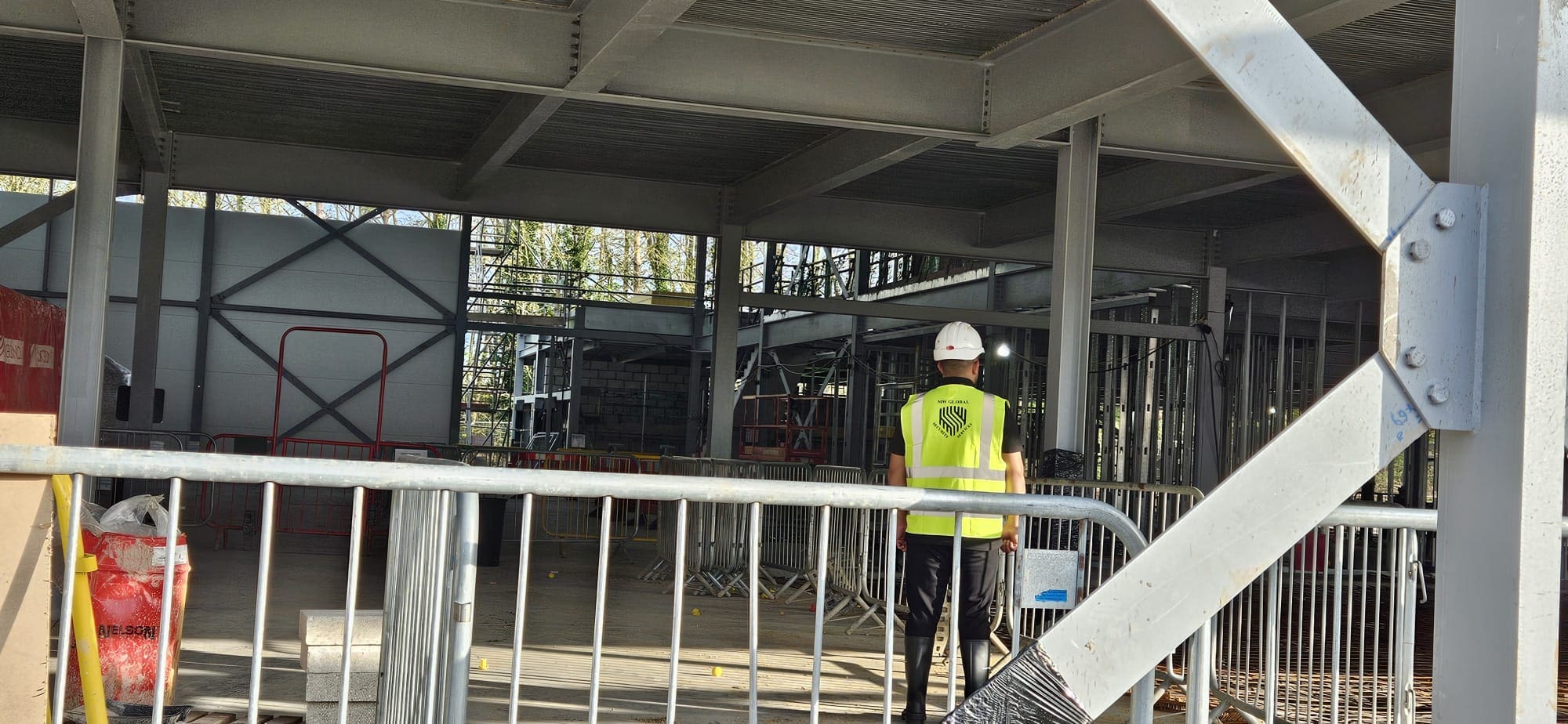
Different Projects Need Different Levels of Protection
A housing development near a public route has different vulnerabilities from an isolated infrastructure compound, an industrial extension or a project spread across several locations.
The assessment should consider travel, communications, officer welfare, emergency contacts, boundary length, plant storage and machinery-theft exposure, public access and how the site changes outside normal working hours.
Cambridgeshire Project Environments
Housing Developments
Open boundaries, phased handovers, occupied neighbouring plots and changing contractor access.
Industrial Construction
Live operations, plant movements, restricted areas and coordination with an existing workforce.
Rural and Infrastructure Sites
Long access routes, isolated compounds, limited assistance and communications that may vary by location.
Build the Plan From the Boundary Inwards
| Layer | What must be understood | Possible controls |
|---|---|---|
| Approach routes | Road access, public paths, neighbouring land and unauthorised vehicle routes | Signage, lighting, barriers, observation points and agreed patrol approach. |
| Boundary | Fence condition, gates, temporary openings and scaffold or earthwork access | Recorded checks, repairs, targeted detection and clear exception reporting. |
| Compounds | Plant, fuel, tools, containers and high-value materials | Controlled keys, immobilisation, lighting, patrol priorities and temporary alarms. |
| Buildings and cabins | Documents, equipment, installed assets and completed areas | Restricted access, internal checks, alarm coverage and key control. |
| Response | Who attends, who authorises repairs and how incidents are escalated | Named contacts, keyholding, evidence standards and emergency-service procedures. |
Guarding for Gates, Contractors and Deliveries
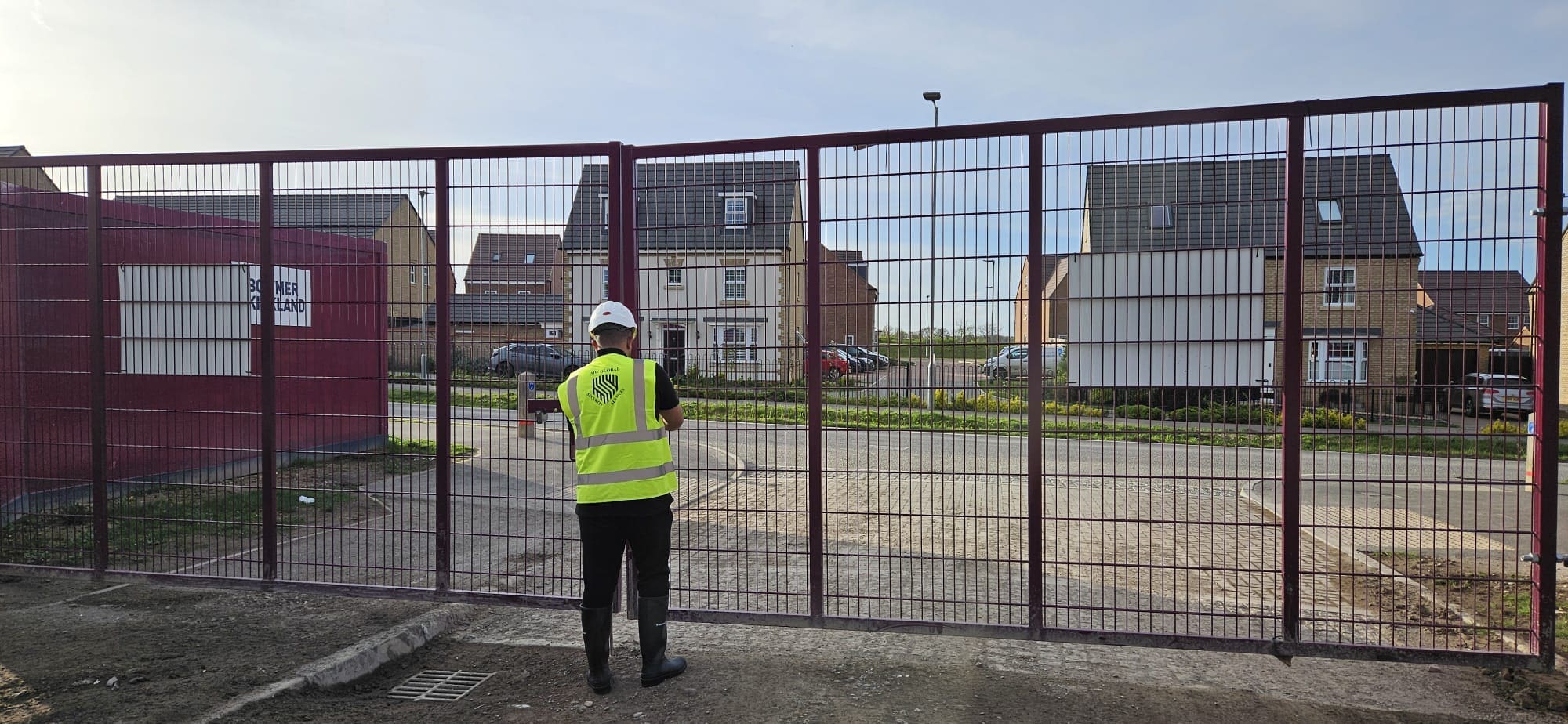
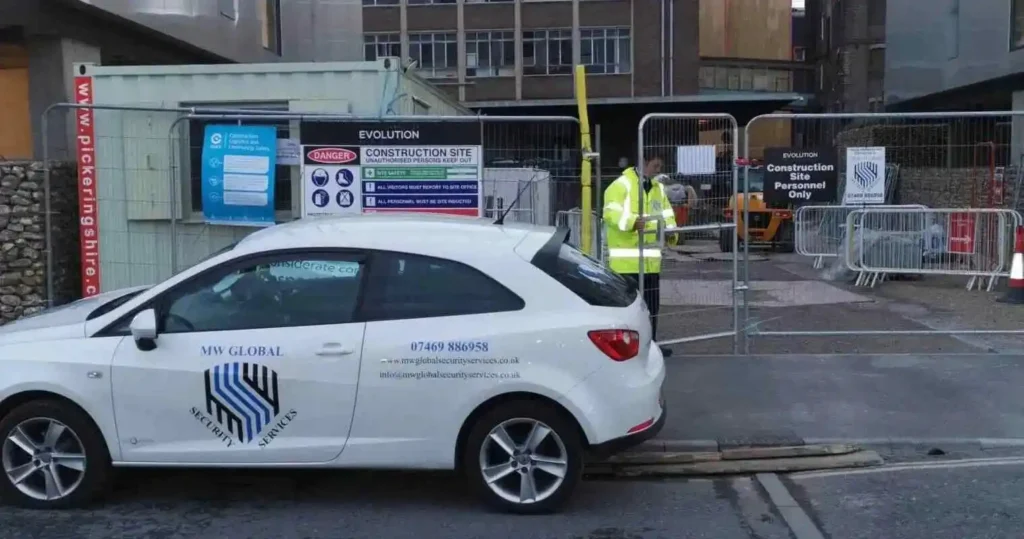
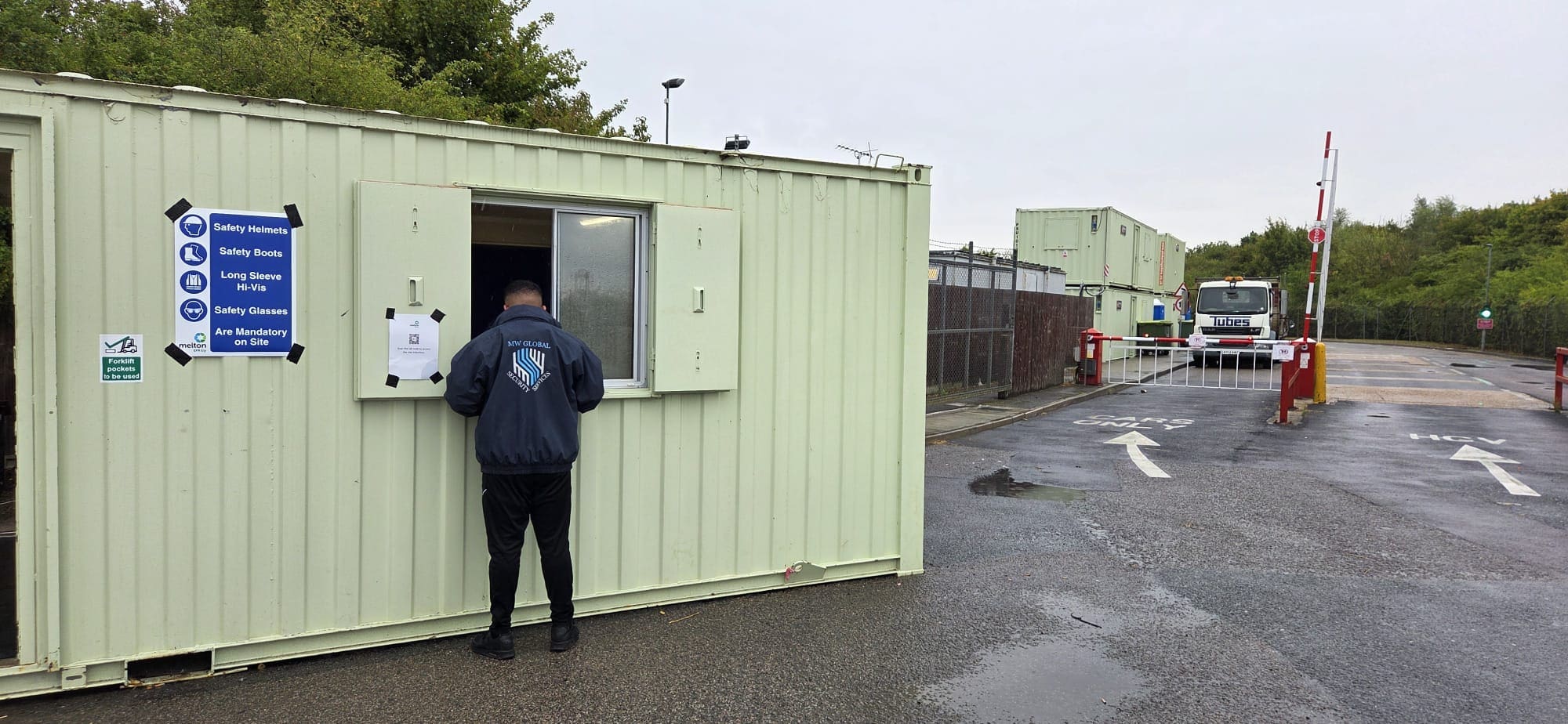
A static officer can provide continuous access control where the site has regular contractors, vehicle movements or high-value assets. The role should be based on documented procedures rather than vague instructions to ‘watch the gate’.
- Expected worker, visitor and supplier procedures
- Vehicle and pedestrian access points
- Induction and pass requirements
- Who can approve an exception
- Keys, restricted areas and final lock-up actions
When Patrols May Be More Proportionate
Some lower-activity or temporary sites do not need a continuous officer. Scheduled or irregular patrols can provide recorded checks of gates, boundaries, cabins, compounds and obvious defects.
Patrols are not the same as an immediate on-site response. The service should state the visit window, route, checks, keys, alarm actions and escalation process without promising an arrival time that has not been operationally agreed.
Temporary Detection for Cabins, Containers and Compounds
Wireless alarms, image verification and temporary CCTV can support sites where mains power, fixed communications or permanent infrastructure are not yet available.
The design must still resolve detection zones, false-alarm risks, internet or mobile connectivity, who receives activations and what physical action follows. Temporary technology should be repositioned or expanded as the build changes.
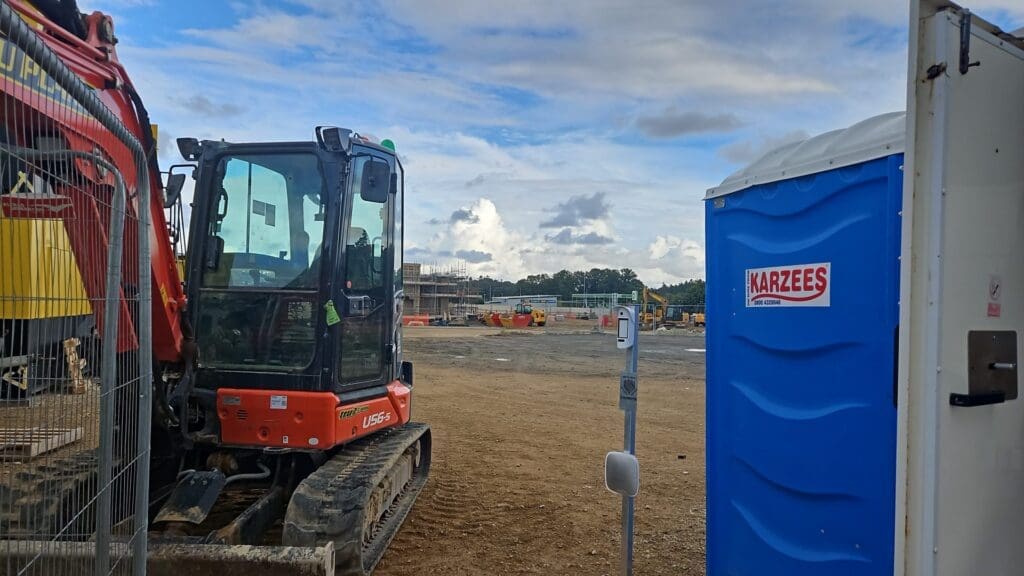
County-Wide Mobilisation Requires Accurate Site Information
Location and Travel
Full postcode, access route, parking, gate arrangements and any restrictions on arrival or departure.
Officer Welfare
A suitable welfare area, lighting, communications, lone-working arrangements and safe patrol route.
Local and Central Contacts
A local person for practical site issues and a central contact for urgent escalation, reports and contractual decisions.
Evidence, Exceptions and Escalation
Where configured, patrol records can include time, date, GPS, NFC or QR checkpoint information and supporting photographs or video. The report should clearly separate routine activity from matters requiring management action.
An officer should record observed facts, preserve relevant evidence and follow the agreed contact process. Security staff do not replace emergency services, specialist engineers, fire-risk assessors or the principal contractor’s health and safety responsibilities. For related security guidance, see our construction site fire risk and arson prevention guide.
What Determines Guarding, Patrol or Technology Use?
| Requirement | Guarding is more likely | Patrols or temporary technology may suit |
|---|---|---|
| Access control | People or vehicles need continuous checking. | The site is closed and only periodic checks are required. |
| Immediate presence | An officer must remain available throughout the vulnerable period. | A recorded visit or agreed alarm response is proportionate. |
| Site activity | Deliveries, contractors or works continue out of hours. | The site is quiet between visits. |
| Risk and consequence | Repeated intrusion, exposed assets or disruption would be severe. | Risk is lower and other physical controls are reliable. |
| Project duration | A sustained phase justifies a staffed post. | A short fault, shutdown or transitional phase needs flexible cover. |
Construction Site Security Cambridgeshire FAQs
Do you cover construction sites outside Cambridge city?
Yes. Requirements can be assessed across Cambridgeshire, including market-town, industrial, rural and edge-of-town projects.
Can one arrangement cover several sites?
A multi-site requirement can be reviewed, but every location still needs its own access, duties, welfare and escalation instructions.
Can patrols inspect internal areas?
Yes, where keys, alarms, access permissions, lone-working controls and the internal route have been agreed.
Can temporary alarms protect cabins and containers?
Yes. The design should account for communications, detection, verification, power, response and changes to the site layout.
Can a guard be deployed within one hour?
That is not guaranteed. Urgent cover can be assessed, but attendance depends on location, staffing, travel, duties, access, welfare and risk.
Do guards replace the principal contractor’s safety arrangements?
No. Security duties should complement the project’s operational and health and safety procedures, not replace them.
Related Cambridgeshire Construction and Security Services
Discuss a Cambridgeshire Construction Security Requirement
Provide the location, project stage, required hours and main risks so the practical security options can be reviewed.
Site-specific enquiry
Request a Cambridgeshire Construction Security Assessment
Provide the project location, stage, site environment and main assets. We will review guarding, patrol, detection, response, access and mobilisation requirements.